
Accessibility Advantage: 5 Hidden Compliance Costs Small Service Businesses Ignore (And How to Turn
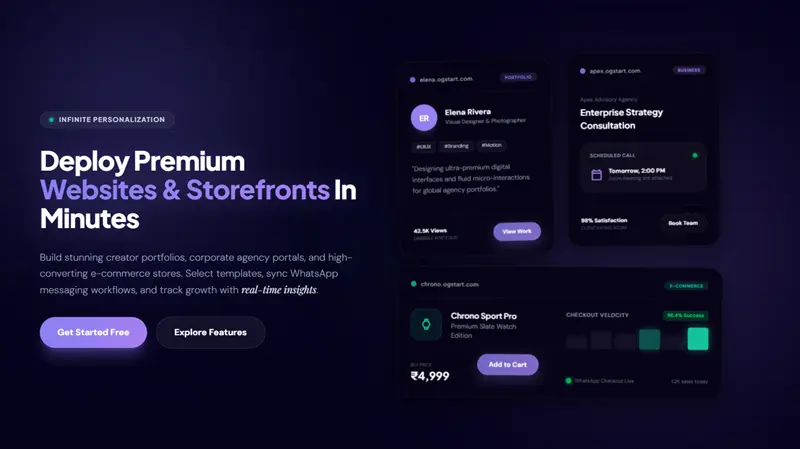
As founders, freelancers, and small business owners, we understand the immense effort that goes into launching and growing an online presence. From crafting your perfect product to perfecting your service offerings, every detail counts. But in the whirlwind of building your dream, it's easy to overlook crucial aspects that can impact your growth, reputation, and even your legal standing. One such area, often misunderstood and underestimated, is web accessibility. Far from just a legal checkbox, a truly accessible website can become a powerful client magnet, opening your business to a wider audience and solidifying your brand's reputation for inclusivity and excellence.
At OGStart.com, our mission is to empower you to launch your business online affordably and scale as you grow. We handle the technical heavy lifting—hosting, infrastructure, website management—so you can focus on what truly matters: your business and your customers. This includes ensuring your content is accessible to everyone, regardless of their abilities. We systematically analyzed the landscape of small service businesses and identified five often-ignored compliance costs that, when addressed proactively, transform into significant competitive advantages.
Why Website Accessibility Is More Than Just a Legal Requirement
Before diving into the hidden costs, let's clarify what we mean by web accessibility. Simply put, it's about designing and developing websites so that people with disabilities can use them effectively. This includes individuals with visual, auditory, physical, speech, cognitive, and neurological impairments. An accessible website ensures everyone can perceive, understand, navigate, and interact with your online content.
While the legal mandates, such as the Americans with Disabilities Act (ADA) in the US, are significant, the benefits of accessibility extend far beyond avoiding lawsuits. An accessible website offers a universally better user experience, improves your search engine optimization (SEO), and broadens your potential customer base. For small service businesses, this means reaching more clients, building stronger relationships, and fostering a reputation as an inclusive and forward-thinking brand.
The Growing Importance of Digital Inclusion
In today's digital-first world, your website often serves as the primary gateway to your business. Excluding a segment of the population due to an inaccessible website is not only discriminatory but also a significant missed business opportunity. Globally, over a billion people live with some form of disability, representing a massive market with substantial spending power. Ignoring this demographic means you're potentially alienating a significant portion of your potential clients.
5 Hidden Compliance Costs Small Service Businesses Ignore
Many small business owners view accessibility as a complex, expensive add-on. However, our experience shows that the true costs often lie in the overlooked consequences of *inaction*, rather than the proactive implementation. We've identified five hidden compliance costs that can silently erode your business's growth and reputation:
1. The Labor of Content Remediation and Ongoing Maintenance
When businesses finally decide to address accessibility, they often face a mountain of work to fix existing content. This isn't just about technical code adjustments; it involves a significant manual effort to make images, videos, PDFs, and written content accessible. For instance, adding descriptive "alt text" to every image, providing accurate captions and transcripts for all video and audio content, and ensuring all documents are screen-reader friendly can be incredibly time-consuming. This labor, whether performed by your team or outsourced, translates directly into a hidden cost, especially if it diverts resources from core business activities.
Furthermore, accessibility is not a one-time fix. As you add new content, update your services, or change your website design, you must ensure that new additions remain accessible. This ongoing maintenance requires consistent effort and vigilance, a cost often underestimated in initial planning.
2. Unexpected Software and Tooling Subscriptions
Achieving and maintaining accessibility often requires more than just manual effort. Many businesses find themselves needing to invest in specialized software, testing tools, and services. This can include accessibility checkers, screen reader emulators for testing, captioning services for multimedia, or PDF remediation tools. While some free tools exist, comprehensive solutions often come with recurring subscription fees or one-time purchase costs. These expenses, while crucial for thorough accessibility, can add up quickly and are rarely factored into initial website budgets for small businesses.
3. Legal & Consulting Fees (Beyond the Lawsuit)
While a full-blown lawsuit is the most feared consequence of non-compliance, legal and consulting costs can arise even before a formal complaint. Many businesses seek legal advice to understand their obligations or hire accessibility consultants for initial audits and guidance. These upfront professional fees, though a wise preventative measure, are still a cost. If a demand letter arrives, even if it doesn't escalate to court, responding and taking corrective action often involves legal counsel and expert assistance, incurring significant costs that can range from thousands to tens of thousands of USD. As noted by an economic analysis, the average cost for a lawsuit settlement could be around USD 180,000.
4. Lost Business and Reputation Damage
Perhaps the most insidious hidden cost is the revenue lost from inaccessible websites and the subsequent damage to your brand's reputation. Research indicates that 71% of people with disabilities will abandon a website that is difficult for them to use. This directly translates to missed sales, lost leads, and decreased customer engagement. A comprehensive economic analysis revealed that businesses lose approximately 13 billion USD annually due to inaccessible websites, with e-commerce experiencing 23% higher cart abandonment rates. Beyond direct revenue, negative experiences can lead to poor word-of-mouth, negative reviews, and a diminished brand image, particularly in an era where consumers increasingly value ethical and inclusive brands.
5. Missed Innovation and Market Expansion Opportunities
Inaccessible websites limit your market reach, but they also stifle innovation. Designing for accessibility often pushes businesses to create more robust, flexible, and user-friendly products and services for *everyone*. By failing to adopt accessibility standards, small businesses miss out on opportunities to innovate, differentiate themselves from competitors, and tap into the significant spending power of the disability community. Instead of viewing accessibility as a constraint, it should be seen as a catalyst for better design and broader appeal, especially in a competitive market.
As detailed by a World Wide Web Consortium (W3C) overview on web accessibility, accessibility enhancements frequently improve the overall user experience for all individuals, not just those with disabilities. Integrating accessibility from the start reduces future development costs, making your website more future-proof.
Turning Accessibility into a 2026 Client Magnet
Now that we've shed light on the hidden costs, let's flip the script. Proactively embracing web accessibility isn't just about compliance; it's a strategic business decision that can make your small service business a client magnet by 2026.
Expanded Market Reach and Customer Loyalty
By making your website accessible, you instantly open your services to a massive, underserved market. This includes people with permanent disabilities, but also those with temporary impairments (like a broken arm) or situational limitations (like using a mobile device in direct sunlight). Providing an inclusive experience fosters deep customer loyalty and trust, as customers are more likely to support and recommend brands that demonstrate care for all users.
Improved SEO and Online Visibility
Many accessibility best practices align directly with good SEO. Semantic HTML, descriptive alt text for images, clear heading structures, keyboard navigation, and fast loading times (often a byproduct of efficient, accessible design) all help search engines crawl and understand your site better. This can lead to higher search rankings, increased organic traffic, and greater online visibility, attracting more potential clients who are actively searching for services like yours.
Enhanced Brand Reputation and Trust
In today's socially conscious marketplace, businesses that prioritize inclusivity stand out. An accessible website signals a commitment to ethical practices and social responsibility, enhancing your brand's reputation and building trust with your audience. This positive perception can be a powerful differentiator, drawing in clients who value businesses with a strong moral compass.
Better User Experience for Everyone
Accessibility improvements often translate into a better, more intuitive experience for all users. Clear navigation, simple language, and robust design benefit everyone, leading to higher engagement, lower bounce rates, and increased conversion rates. When your website is easy and enjoyable to use for all, clients are more likely to stay, explore your offerings, and ultimately convert into paying customers.
Practical Steps for Small Service Businesses with OGStart
So, how can you, as a small service business owner, harness the power of accessibility without breaking the bank? The key is a proactive, integrated approach, especially when using a platform designed for affordability and ease of use like OGStart.com.
Start with an Accessible Foundation
With OGStart, you're already building on a platform that handles many of the underlying technical complexities. This means you can focus on making your content itself accessible. Our platform is designed to be clean and intuitive, which inherently supports better accessibility practices from the ground up.
Focus on Content Accessibility
This is where your direct effort makes the biggest difference. Here are actionable steps:
- Descriptive Alt Text: For every image you upload, add clear, concise alternative text that describes the image's content and purpose. This helps screen readers convey visual information to users with visual impairments.
- Meaningful Headings: Use HTML heading tags (`<h1>`, `<h2>`, `<h3>`, etc.) to structure your content logically and hierarchically. This aids navigation for screen reader users and improves readability for everyone.
- Keyboard Navigation: Ensure all interactive elements on your website (links, buttons, forms) can be accessed and operated using only a keyboard.
- Color Contrast: Choose color schemes with sufficient contrast between text and background. This is crucial for users with visual impairments and those viewing your site in challenging lighting conditions.
- Clear Language: Use simple, straightforward language. Avoid jargon where possible and explain complex terms. This benefits users with cognitive disabilities, non-native speakers, and busy professionals alike.
- Transcripts and Captions: If you use videos or audio on your site to showcase your services or testimonials, provide transcripts for audio and captions for videos.
- Descriptive Links: Avoid generic link texts like "click here." Instead, use descriptive phrases that indicate where the link will lead.
Regular Checks and Updates
Accessibility is an ongoing process. Regularly review your content for accessibility issues. You can use free online tools for initial scans, but manual checks are often necessary for a thorough evaluation. With OGStart, as you update your site, keep accessibility in mind for every new piece of content or design adjustment. This continuous effort is far more manageable and affordable than large-scale retrofits.
Remember, OGStart is built for first-time founders and small businesses. We provide the platform; you provide the accessible content. This partnership ensures you can launch fast, validate ideas affordably, and upgrade your accessibility efforts as your business grows and your needs evolve.
Compliance-Driven vs. Opportunity-Driven Accessibility
Let's consider the fundamental shift in mindset from merely "complying" to actively seeking "opportunity" through accessibility.
| Feature | Compliance-Driven Mindset | Opportunity-Driven Mindset (with OGStart) |
|---|---|---|
| Primary Goal | Avoid lawsuits and penalties. | Expand market, enhance brand, innovate, avoid legal issues. |
| Approach | Reactive, minimal effort to meet legal thresholds. | Proactive, integrated, aiming for best possible user experience for all. |
| Cost Perception | Unnecessary expense, a burden. | Strategic investment with high ROI. |
| Focus | Technical checklist items. | Real-world user needs and business growth. |
| Outcome | Basic compliance, limited long-term benefits. | Client growth, stronger brand, superior user experience, reduced legal risk. |
| OGStart Role | Provides a stable, basic platform. | Enables focus on accessible content, offering the infrastructure to scale an inclusive business. |
We believe that by adopting an opportunity-driven mindset, small service businesses can not only mitigate the hidden costs of non-compliance but also unlock new avenues for client acquisition and sustainable growth. This aligns perfectly with OGStart's core message: launch your business online for INR 99, and upgrade only when your business grows, including your commitment to a truly inclusive online presence.
The Cost of Inaction in 2026 and Beyond
Ignoring web accessibility is becoming an increasingly risky gamble. With increasing legal scrutiny and a growing awareness among consumers, the cost of inaction is escalating. Lawsuits are on the rise, and settlements can be substantial, often far exceeding the cost of proactive implementation. Beyond the legal fees and potential fines, the irreversible damage to your brand's reputation can be catastrophic, alienating potential clients and stifling growth.
As detailed in a recent US Department of Justice overview on the Americans with Disabilities Act, ADA Title III requires that businesses open to the public provide full and equal access to all users, which now includes digital spaces like websites. There is no blanket exemption based on business size or revenue for Title III, meaning small businesses are just as liable. Proactive investment in accessibility is not just a strategic financial choice but an essential one for any business planning long-term success.
Conclusion: Make Accessibility Your 2026 Client Magnet with OGStart
The journey of building a successful online service business is filled with challenges and opportunities. Web accessibility, while often perceived as a compliance burden, is in fact a powerful lever for growth and client acquisition. By understanding and proactively addressing the hidden costs of non-compliance—from remediation labor and tooling expenses to legal fees, lost business, and missed innovation—you can transform a potential liability into a strategic advantage.
At OGStart.com, we empower you to lay this accessible foundation from the start. By providing an affordable, easy-to-use platform that handles your hosting and infrastructure, we enable you to focus your energy on creating an inclusive, client-attracting online presence. Launch your business online for INR 99, build your website with accessibility in mind, and watch as you attract a broader, more loyal client base. Don't pay like a big brand on day one; start small, launch fast, and let your commitment to accessibility be the magnet that draws clients to your growing service business.