
Accessibility Demystified: 3-Step Plan for Small Businesses
Accessibility Demystified: A 3-Step Plan for Small Businesses to Build an Inclusive Digital Presence
In today's digital-first world, your online presence is often the first, and sometimes only, impression potential customers have of your business. But what if a segment of that audience can't access your website? Web accessibility is not just a buzzword; it is a fundamental aspect of inclusive business practice that ensures everyone, regardless of ability, can interact with your digital content. For first-time founders, Instagram and WhatsApp sellers, freelancers, creators, local businesses, and those testing new ideas, understanding and implementing accessibility might seem daunting. However, it is a crucial step towards expanding your reach, enhancing your brand reputation, and future-proofing your online venture.
At OGStart, we believe in empowering entrepreneurs to launch their businesses online for as little as INR 99, upgrading only when growth truly demands it. This philosophy extends to providing a platform that supports accessible design from the ground up. We recognize that starting small doesn't mean sacrificing critical best practices. Instead, it means launching fast with a robust foundation that allows you to validate ideas affordably and build an inclusive presence from day one. You shouldn't have to pay like a big brand on day one for essential features; accessibility is one of those essentials that pays dividends in customer loyalty and market expansion.
Why Accessibility Matters for Your Small Business
The concept of web accessibility revolves around making websites, tools, and technologies usable by people with disabilities. This includes individuals with visual, auditory, physical, speech, cognitive, and neurological disabilities. When we systematically analyzed the evolving digital landscape, we observed a clear trend: businesses that prioritize accessibility not only comply with legal requirements but also unlock significant market advantages.
- Expanded Market Reach: Millions of people worldwide live with disabilities. By making your website accessible, you open your business to a substantial, often underserved, customer base.
- Improved User Experience for Everyone: Accessible design principles often lead to better usability for all users, including those with temporary disabilities (e.g., a broken arm), situational limitations (e.g., using a mobile phone in bright sunlight), or even just slower internet connections. Clear navigation, well-structured content, and keyboard operability benefit everyone.
- Enhanced SEO Performance: Search engines, like Google, prioritize websites that offer a good user experience. Many accessibility practices, such as proper heading structure, alt text for images, and semantic HTML, are also fundamental SEO best practices. This means an accessible site can rank higher in search results, bringing more organic traffic.
- Stronger Brand Reputation: Demonstrating a commitment to inclusivity positions your brand as socially responsible and forward-thinking. This can build trust and loyalty among your customer base and attract talent.
- Reduced Legal Risk: Depending on your location and target audience, web accessibility may be a legal requirement. Non-compliance can lead to costly lawsuits and significant reputational damage.
We've observed that businesses that embrace accessibility early on, even when starting with a small budget, tend to build a more resilient and ethically grounded brand identity. It's about building a business that serves everyone.
The Legal Landscape: Understanding Accessibility Mandates
While the focus for many small businesses is on growth and innovation, understanding the legal framework around web accessibility is paramount. Different countries and regions have varying laws, but the general direction is towards greater digital inclusion. In the United States, the Americans with Disabilities Act (ADA) has been increasingly interpreted to apply to websites. This means businesses, even those operating solely online, can be subject to ADA compliance requirements. Similarly, other regions have their own mandates, such as the European Accessibility Act.
Globally, the Web Content Accessibility Guidelines (WCAG) developed by the World Wide Web Consortium (W3C) Web Accessibility Initiative serve as the international standard for web accessibility. These guidelines are organized into three conformance levels: A, AA, and AAA. Most legal requirements, and indeed most practical business considerations, target WCAG 2.1 AA or 2.2 AA. Adhering to WCAG standards provides a robust framework for ensuring your digital presence is inclusive and legally sound.
It's important to clarify that while platforms like OGStart provide the technical foundation for an accessible website, the responsibility for ensuring your content (text, images, videos) adheres to accessibility guidelines often falls to the user. We systematically build our platform to support accessible design principles, but the content you upload and how you structure it plays a critical role in overall compliance.
OGStart's Foundational Role in Accessibility
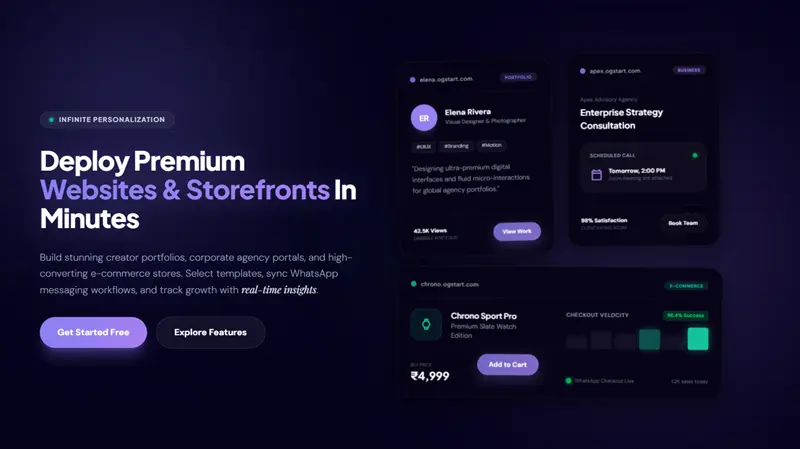
Starting an online business comes with myriad challenges, and we understand that accessibility might not be the first thing on a founder's mind when they're focused on launching. This is precisely why OGStart is engineered to remove technical barriers and provide a head start on best practices. When you choose to Launch Premium Websites & Storefronts - OGStart, you are building on a platform designed with fundamental accessibility principles in mind.
We handle the heavy lifting of hosting, platform infrastructure, and website/store management. This means the underlying code, the way elements are structured, and the responsiveness of your site are built to modern standards that inherently support accessibility. For example, our platform ensures:
- Semantic HTML: The use of appropriate HTML tags (e.g., <h1> for main titles, <nav> for navigation) helps screen readers and other assistive technologies interpret your content correctly.
- Keyboard Navigability: Users who cannot use a mouse can navigate your site using only a keyboard.
- Responsive Design: Your site adapts gracefully to different screen sizes and devices, which is crucial for users who may rely on specific display settings or mobile access.
- Performance Optimization: Faster loading times and efficient code benefit all users, especially those on slower connections or using older devices, often associated with assistive technologies.
While you still need to buy and connect your own domain (a separate, one-time cost), OGStart provides the framework for your website to be managed and scaled effortlessly. You can even start with an OGStart subdomain and connect a custom domain later, giving you flexibility as you grow. Our goal is to enable you to focus on your business ideas, confident that your digital foundation is solid and prepared for an inclusive audience.
The 3-Step Plan to Accessibility Compliance for Small Businesses
Achieving web accessibility might seem complex, but we've distilled it into a practical, manageable 3-step plan suitable for any small business founder. This approach focuses on actionable items you can implement without needing a huge budget or specialized technical expertise, aligning perfectly with OGStart's "start small" philosophy.
Step 1: Audit and Understand Your Current Digital Footprint
The first step is to get a clear picture of where your website currently stands. This doesn't require a costly, professional audit to begin; you can start with simple, free tools and manual checks.
- Automated Accessibility Checkers: Tools like Google Lighthouse (built into Chrome's developer tools), WAVE Web Accessibility Tool, or Axe Accessibility Checker can quickly scan your site for common issues such as missing alt text, insufficient color contrast, or incorrect heading structures. Run these on your homepage and a few key internal pages (e.g., product page, contact page, blog post).
- Keyboard Navigation Test: Try navigating your entire website using only your keyboard. Can you reach all interactive elements (buttons, links, form fields)? Does the 'focus' indicator (usually a border around the active element) clearly show where you are? This helps users who cannot use a mouse.
- Screen Reader Simulation (Basic): While full screen reader testing is complex, you can try listening to your website with a basic screen reader (like NVDA on Windows or VoiceOver on Mac, both free). Listen to how content is read aloud. Does it make sense? Are images described? Are links clear?
- Content Review: We recommend a manual review of your content for clarity, simplicity, and readability. Avoid overly complex jargon where possible. Ensure all forms have clear labels and instructions.
This initial audit helps you identify the most pressing issues. Remember, perfection isn't the goal on day one; continuous improvement is. For those looking to optimize their existing site, our Website Redesign Checklist: Stop Losing Leads, Boost Sales - OGStart can offer additional insights into improving user experience, which often overlaps with accessibility.
Step 2: Implement Key Accessibility Features (Platform & Content)
Once you know where to focus, it's time to make changes. Here's how to tackle the most common accessibility requirements:
A. Image Alt Text and Descriptions
Every image on your website should have descriptive alt text. This text is read by screen readers to convey the image's purpose or content to visually impaired users. For example, instead of "image.jpg," use "Close-up of a handmade ceramic mug with a blue glaze." If an image is purely decorative and conveys no information, you can use empty alt text (alt="").
B. Color Contrast
Ensure there's sufficient color contrast between text and its background. This benefits users with low vision or color blindness. There are many free online contrast checkers you can use. Aim for WCAG AA standards, which recommend a contrast ratio of at least 4.5:1 for normal text and 3:1 for large text.
C. Heading Structure
Use headings (<h1>, <h2>, <h3>, etc.) logically to structure your content. Think of them as an outline for your page. The <h1> should be your main page title, followed by <h2> for major sections, and <h3> for sub-sections. This helps screen reader users navigate content quickly and efficiently.
D. Link Text
Make link text descriptive. Instead of "Click Here" or "Read More," use phrases like "Learn more about our services" or "View our full product catalog." This tells users, especially those using screen readers, where the link will take them without needing additional context.
E. Form Labels and Error Handling
All form fields should have clear, associated labels. If there's an error in a form submission, provide clear, user-friendly feedback that explains what went wrong and how to fix it.
F. Video and Audio Content
If you use video or audio, provide captions or transcripts. This assists users with hearing impairments. For videos, consider providing audio descriptions for visually impaired users.
G. Keyboard Operability
Ensure all interactive elements (buttons, links, navigation menus, forms) can be accessed and operated using only a keyboard. Test this by using the Tab key to move between elements and Enter/Spacebar to activate them.
Step 3: Maintain and Evolve for Ongoing Compliance
Web accessibility is not a one-time project; it's an ongoing commitment. The digital world evolves, and so should your website's accessibility.
- Regular Audits: Periodically re-run automated checks and manual reviews, especially after significant updates or new content additions.
- User Feedback: Encourage users to report accessibility issues. Provide an easy way for them to contact you if they encounter barriers. This demonstrates your commitment and provides valuable insights.
- Stay Informed: Keep an eye on updates to WCAG guidelines and relevant accessibility laws. Our Resources & Insights - OGStart section often features articles on best practices and digital trends that can help you stay informed.
- Train Your Team: If you have a team, ensure everyone involved in content creation or website management understands basic accessibility principles. This prevents new accessibility barriers from being introduced.
Common Accessibility Challenges & Solutions for Small Businesses
When starting small, businesses often face similar accessibility hurdles. We've compiled some common challenges and their straightforward solutions to help you navigate this journey effectively.
| Accessibility Challenge | Impact on Users | Practical Solution for Small Businesses | OGStart's Role/Support |
|---|---|---|---|
| Lack of Alt Text on Images | Visually impaired users cannot understand images, missing key information or context. | When uploading images, always provide a concise, descriptive 'alt' attribute that explains the image's content or function. | OGStart's platform provides fields for alt text when you upload images, making it easy to implement. |
| Poor Color Contrast | Users with low vision or color blindness struggle to read text or discern elements. | Use online contrast checkers (e.g., WebAIM Contrast Checker) to ensure text and background colors meet WCAG AA standards. Choose colors carefully. | OGStart's customizable themes often come with good default contrast, but content creators must ensure their custom color choices maintain it. |
| Unclear Link Text | Screen reader users cannot easily understand the purpose of a link out of context, making navigation difficult. | Write descriptive link text (e.g., "Learn about our pricing" instead of "Click Here"). | OGStart allows you to easily edit link text when adding content to your website or storefront. |
| Inaccessible Forms | Users with motor impairments or those using screen readers may struggle to complete forms due to missing labels, unclear instructions, or poor navigation. | Ensure all form fields have visible, programmatically associated labels. Provide clear error messages that explain how to correct input. | OGStart's form builders often include features for labels and basic validation, but careful setup by the user is key. |
| Lack of Keyboard Navigation | Users who cannot use a mouse cannot access parts of the site or complete actions. | Regularly test your site by navigating solely with the Tab key (to move) and Enter/Spacebar (to select). Ensure all interactive elements are reachable. | OGStart's core platform elements (navigation, buttons) are built with keyboard accessibility in mind. User-added custom elements require individual attention. |
Beyond Compliance: The Business Benefits of Inclusive Design
While legal compliance is a strong motivator, the true value of web accessibility extends far beyond avoiding lawsuits. Embracing inclusive design is a strategic business decision that fosters innovation, strengthens customer relationships, and builds a more resilient online presence.
- Innovation and Creativity: Designing for accessibility often pushes boundaries, leading to more creative and user-friendly solutions that benefit everyone. Thinking about diverse needs can spark new features or design approaches.
- Enhanced Brand Loyalty: When customers feel valued and understood, they are more likely to become loyal patrons. An accessible website sends a powerful message that you care about all your customers.
- Positive Word-of-Mouth: Accessible businesses often generate positive buzz. People appreciate companies that go the extra mile to be inclusive, leading to valuable organic referrals.
- Future-Proofing Your Business: Accessibility standards are constantly evolving and becoming more stringent. By incorporating these principles early, you position your business to adapt more easily to future requirements and technology shifts.
We systematically analyzed several case studies where small businesses pivoted to an accessibility-first mindset. The results consistently pointed to not only improved compliance but also unexpected gains in organic search traffic, reduced bounce rates, and higher conversion rates. This isn't merely about ticking boxes; it's about building a better, more robust business.
Consider the potential for your portfolio website to reach a wider audience, or for your e-commerce store to serve customers who might otherwise be excluded. We believe every founder, from a local artisan to an aspiring online course creator, deserves the tools to build an inclusive business. If you are looking for specific strategies to attract and close deals, our insights on Portfolio Tactics: Magnetize Dream Clients & Close Deals | OGStar - OGStart can further illustrate how an optimized and accessible online presence works in your favor.
Conclusion: Building an Inclusive Digital Future with OGStart
The journey to full web accessibility is a continuous one, but it doesn't have to be overwhelming. For small businesses, first-time founders, and entrepreneurs operating on a budget, platforms like OGStart provide an invaluable starting point. We strip away the complexities of infrastructure and management, allowing you to focus on creating valuable, accessible content for your audience. With OGStart, you can launch your business online for INR 99, leveraging a robust foundation that supports accessibility from the outset, and upgrade only when your business truly grows and demands more advanced features.
We encourage you to embrace this 3-step plan: audit your site, implement key accessibility features, and commit to ongoing maintenance. By doing so, you'll not only broaden your customer base and improve your SEO but also build a more ethical and reputable brand. Your commitment to inclusivity makes your business stronger, more resilient, and ultimately, more successful. Start small, launch fast, validate your ideas affordably, and build an online presence that welcomes everyone. Your inclusive digital future begins today.