
Art & Profit: The Top 5 Print-on-Demand Portfolio Platforms for Artists to Maximize Sales in 2026 (I
In the dynamic world of art and creativity, the path from creation to commerce is constantly evolving. For artists today, simply creating magnificent works is often not enough; successfully showcasing and selling them requires a strategic approach to the digital landscape. Among the most potent tools for monetizing artistic talent is the print-on-demand (POD) model, paired with a compelling online portfolio. We systematically analyzed the current ecosystem to bring you an in-depth review of the top 5 print-on-demand portfolio platforms designed to maximize artists' sales in 2026. Our goal is to equip you with the knowledge to make informed decisions, launch your artistic business, and thrive in the digital economy.
The Evolving Landscape of Art Sales and Print-on-Demand
The digital age has fundamentally reshaped how artists connect with their audience and generate income. Gone are the days when gallery representation was the sole viable path to commercial success. Today, the internet offers unprecedented opportunities for artists to reach a global market directly. This shift has empowered countless creators, making it possible to build a sustainable career doing what they love.
Why Print-on-Demand is a Game-Changer for Artists
Print-on-Demand (POD) has emerged as a revolutionary business model for artists, significantly lowering the barrier to entry for selling merchandise. With POD, you can offer your designs on a vast array of products—from apparel and home decor to accessories—without the need for upfront inventory investment, storage, or the complexities of shipping and fulfillment. The product is only created once a customer places an order, making it a low-risk, high-reward venture. This model allows artists to focus on what they do best: creating art.
The print-on-demand market is experiencing explosive growth, making it an increasingly attractive avenue for artists. We've seen projections indicating that the global print-on-demand market size is expected to climb from approximately 12.96 billion USD in 2025 to a staggering 102.99 billion USD by 2034, representing a compound annual growth rate (CAGR) of 26%. Another industry analysis forecasts the market to reach 118.85 billion USD by 2035. This monumental growth signals that the POD industry is not just a trend but a well-established and expanding segment of e-commerce, driven by consumer demand for personalized and unique products.
The Power of a Dedicated Portfolio for Maximizing POD Sales
While POD platforms offer excellent marketplaces, a dedicated online portfolio is your cornerstone for building a professional brand and maximizing sales. Think of it as your primary digital studio and gallery, a place where you control the narrative, showcase your best work, and directly engage with potential collectors. A compelling portfolio doesn't just display your art; it tells your story, demonstrates your unique style, and highlights your skills.
Having a personal online presence, separate from marketplaces, is crucial. It allows you to:
- Curate Your Brand Identity: Present your work in a cohesive, professional manner that reflects your artistic vision.
- Build Trust and Credibility: A professional website enhances your authority and trustworthiness in the eyes of buyers.
- Drive Direct Sales: Guide interested buyers from your portfolio directly to your chosen POD stores or even your own e-commerce shop.
- Capture Leads: Collect email addresses for newsletters and special offers, nurturing a loyal audience.
- Showcase Your Process: Beyond final products, a portfolio can reveal your creative journey, sketches, and inspirations, deepening audience connection.
Many artists are already leveraging online channels successfully. In 2023, 40% of artists reported online sales as their primary income source, a significant jump from 30% in 2021. The number of artists directly selling to consumers online also surged by 40% in 2023, reaching 1.2 million. This demonstrates a clear trend: artists who take control of their online presence are seeing tangible results.
Understanding Essential Features of Top Print-on-Demand Platforms
Before diving into our top platform recommendations, it's vital to understand the key features that differentiate them and what to look for based on your specific artistic and business needs. We systematically considered these aspects during our evaluation.
Product Variety and Customization
The range of products a platform offers directly impacts your potential revenue streams. Look for platforms that provide a diverse catalog, including popular items like t-shirts, hoodies, phone cases, mugs, and posters, but also more unique items like blankets, puzzles, and notebooks. The ability to easily place and adjust your designs on these products, and even offer variations, is paramount.
Quality and Fulfillment Reliability
Your reputation as an artist selling physical products hinges on the quality of the final product and the efficiency of its delivery. We prioritize platforms known for their high-quality printing, durable materials, and reliable fulfillment services. This includes factors like production time, shipping speeds, and customer service for handling issues.
Artist Control and Branding
While you're leveraging a third-party platform, the degree of control you have over your storefront, product presentation, and even packaging can significantly impact your brand image. Some platforms offer more customization options for your shop page, while others are more templated. Consider how much brand immersion you want to offer your customers directly on the POD platform.
E-commerce Integration and Sales Tools
Many artists use POD platforms as part of a broader e-commerce strategy. Seamless integration with external online stores (like those built on Shopify, WooCommerce, or even a simple portfolio site from OGStart) is a massive advantage. Additionally, evaluate what sales tools the platform provides, such as promotional features, analytics, and marketing support.
Royalty Structure and Payouts
Understanding how you earn money is critical. Each platform has a different royalty or commission structure. Some allow you to set your own profit margins, while others offer a fixed percentage. We recommend thoroughly reviewing these structures to ensure they align with your income goals. Also, check the payout thresholds, frequency, and available payment methods.
Our Systematic Review: Top 5 Print-on-Demand Portfolio Platforms for Artists in 2026
We've meticulously evaluated numerous platforms to bring you the top contenders that offer a robust environment for artists to sell their print-on-demand products and integrate with their broader online presence.
1. Redbubble: The Community-Driven Marketplace
Redbubble stands out as a highly popular and artist-friendly platform, known for its vibrant community and extensive product range. It’s incredibly easy for artists to upload designs and apply them to a wide variety of items, from apparel and stickers to wall art and home goods. The platform manages all printing, shipping, and customer service, making it a truly hands-off experience for the artist. Redbubble’s strength lies in its built-in audience; millions of shoppers visit the site daily looking for unique designs. This can be a huge advantage for new artists seeking visibility without extensive marketing efforts.
Pros: Wide product catalog, large existing customer base, easy to use, artist-friendly community features, good global reach. Cons: Can be highly competitive due to the large number of artists, lower profit margins compared to platforms where you control pricing entirely, less control over storefront branding.
2. Society6: Curated Design and Quality Focus
Society6 cultivates a reputation for higher-quality, design-focused products, appealing to an audience that values aesthetic and artistic integrity. While it also offers a broad range of products, there's a strong emphasis on home decor, art prints, and more premium items. Society6 has a slightly more curated feel than Redbubble, often featuring trendier or more sophisticated designs. Artists receive a fixed percentage of sales, making the pricing structure straightforward, though it limits direct control over profit margins.
Pros: Focus on quality and curated aesthetics, attractive for home decor and art print buyers, good product photography, streamlined process for artists. Cons: Fixed royalty structure means less control over pricing, approval process for new artists/designs can be slower, potentially smaller daily traffic than Redbubble for general designs.
3. Fine Art America / Pixels: Broad Reach for Fine Artists
Fine Art America (which operates under the consumer brand Pixels.com) is a powerhouse for fine art prints, specializing in wall art, including framed prints, canvas prints, and metal prints. It caters particularly well to photographers and traditional artists who want to sell high-quality reproductions of their work. Beyond prints, they also offer a decent range of lifestyle and home decor products. Fine Art America provides robust tools for artists to set their own prices and offers various customization options for their online stores hosted on the platform. Their extensive network of production facilities ensures quality and efficient global fulfillment.
Pros: Excellent for high-quality art prints and photography, artists set their own prices, strong global fulfillment network, tools for building an on-site portfolio. Cons: Interface can feel less modern than other platforms, stronger focus on prints might limit variety for artists wanting to sell more diverse merchandise.
4. Printful: Seamless E-commerce Integration
Printful is unique in this list as it functions primarily as a fulfillment partner rather than a direct marketplace. This means you need your own online store (e.g., built on platforms like OGStart, Shopify, WooCommerce, or Etsy) to sell your designs. Printful then integrates seamlessly with your store, fulfilling orders automatically. This model gives you complete control over your branding, customer relationships, and profit margins. Printful boasts high-quality products, advanced printing techniques (like direct-to-garment, embroidery), and excellent customer support, making it ideal for artists who want to build a truly independent brand. The ability to launch a new product in minutes, without inventory, is a key advantage.
Pros: Full control over branding and pricing, high-quality products and printing, wide range of integrations with e-commerce platforms, extensive product customization, no inventory required. Cons: Requires you to manage your own storefront and marketing, no built-in audience (you drive all traffic), steeper learning curve for e-commerce integration compared to marketplace models.
5. Zazzle: Extensive Customization Options
Zazzle distinguishes itself with an emphasis on personalization and an incredibly vast product catalog. Customers can often customize products with their own text or images in addition to an artist's design. This platform is perfect for artists whose work lends itself to customization, such as invitations, greeting cards, or personalized gifts. Zazzle also allows artists to set their own royalty rates, offering flexibility in pricing. The platform has a robust community and tools for designers to create customizable templates, adding another layer of income potential.
Pros: Huge product variety, strong focus on customer customization, artists set royalty rates, good for personalized and gift items, strong brand recognition. Cons: Can feel cluttered due to vast options, less focused on "fine art," navigating the platform can be complex for both artists and customers due to extensive options.
Comparative Analysis: Choosing Your Ideal Print-on-Demand Partner
To help you decide, we’ve created a comparison table outlining key attributes of our top 5 platforms:
| Feature | Redbubble | Society6 | Fine Art America / Pixels | Printful | Zazzle |
|---|---|---|---|---|---|
| Model | Marketplace | Marketplace | Marketplace/Storefront | Fulfillment Partner | Marketplace |
| Product Variety | Very High | High (curated) | High (esp. prints) | Very High | Extremely High |
| Pricing Control | Moderate (set margins) | Low (fixed royalty) | High (set prices) | High (set retail prices) | High (set royalty rates) |
| Branding Control | Low | Moderate | Moderate | High (via your store) | Moderate |
| Audience | Large Built-in | Curated Built-in | Built-in (Art Focus) | None (you drive traffic) | Large Built-in |
| E-commerce Integration | Limited | Limited | Limited | Extensive | Limited |
| Ideal For | Beginners, broad appeal | Design-conscious artists | Fine artists, photographers | Independent brands, store owners | Customizable gifts, diverse items |
Beyond the Platform: Strategies to Boost Your Art Sales
While selecting the right print-on-demand platform is a critical first step, maximizing your sales requires a holistic strategy that extends beyond the platform itself. We emphasize a multi-faceted approach to truly thrive.
Building Your Brand with a Professional Online Presence
As we've highlighted, a dedicated online presence is indispensable. Your professional website serves as your digital home base, central to your brand identity and long-term success. It's where you tell your story, showcase your unique aesthetic, and establish credibility. Whether it's a portfolio of your original works, a blog discussing your artistic process, or an e-commerce store selling directly, this online hub legitimizes your artistic venture.
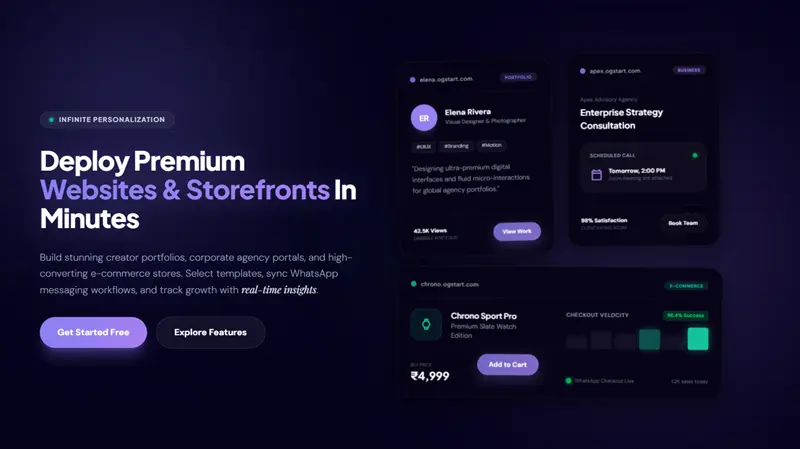
For emerging artists and first-time founders, the idea of building a professional website might seem daunting or expensive. However, with platforms like OGStart.com, you can launch your own portfolio website or even an online store quickly and affordably. Imagine having a professional site where potential buyers can discover your art, learn about your journey, and then easily navigate to your print-on-demand products, all for an initial cost of just INR 99. OGStart handles the technical heavy lifting—hosting, infrastructure, and website management—so you can focus on your art and growing your business. You bring your unique domain name, and OGStart empowers you to start small, launch fast, and validate your creative ideas without paying like a big brand on day one. You only upgrade as your business flourishes, ensuring a low-risk, high-growth path.
A well-curated online portfolio can significantly improve your market standing, allow you to share your career in progress inexpensively, and protect your intellectual property.
Mastering Marketing and Promotion
Even the best art on the best platform won't sell itself. Effective marketing is crucial. This includes:
- Social Media Engagement: Actively share your work, process, and products on platforms like Instagram, Pinterest, and TikTok. Engage with your audience and use relevant hashtags.
- Email Marketing: Build an email list through your personal website. This is one of the most reliable sales channels for artists, allowing you to directly communicate with your most engaged fans about new releases, promotions, and behind-the-scenes content.
- Search Engine Optimization (SEO): Optimize your product listings and website content with relevant keywords so potential buyers can find your art through search engines.
- Collaborations and Partnerships: Work with other artists, influencers, or complementary brands to expand your reach.
- High-Quality Visuals: Invest in excellent photography of your art and mockups of your products. Visual appeal is paramount in online sales.
Understanding Your Audience and Niche
Knowing who your art appeals to most will help you tailor your designs, products, and marketing efforts effectively. Are your buyers interested in abstract expressionism for their minimalist homes, or do they seek vibrant, pop-art designs for personal accessories? Research what's selling in your niche and how successful sellers position similar items. This market intelligence will guide your product selection and pricing strategies.
By understanding your ideal customer, you can create more targeted campaigns and develop art that truly resonates, fostering a loyal customer base rather than just chasing fleeting trends. Focusing on a niche can lead to sustainable growth and allows you to become a recognized expert in a specific artistic style or product category.
Conclusion: Empowering Artists in the Digital Age
The convergence of print-on-demand technology and robust online platforms has created an unprecedented era of opportunity for artists. By strategically utilizing platforms like Redbubble, Society6, Fine Art America, Printful, and Zazzle, you can transform your artistic passion into a viable business. However, true long-term success stems from a thoughtful approach that integrates these powerful tools with your own authoritative online presence.
We've seen that the print-on-demand market is poised for massive expansion, and a significant portion of artists are already making their primary income through online sales. By understanding the nuances of each platform, leveraging a dedicated online portfolio (which can be launched affordably with solutions like OGStart.com), and committing to consistent marketing efforts, you can not only maximize your sales in 2026 but also build a resilient and thriving artistic enterprise for years to come. The digital canvas is vast, and with the right strategy, your art can truly reach the world.