
Boost Service Business ROI: 7 Steps to CRM Automation
Boost Service Business ROI: 7 Steps to CRM Automation
In today's dynamic business landscape, service-oriented enterprises face a dual challenge: delivering exceptional client experiences while simultaneously scaling operations efficiently. The traditional approach, often reliant on manual processes and disparate tools, is no longer sustainable. It leads to lost opportunities, client dissatisfaction, and ultimately, stagnated growth. This is where Customer Relationship Management (CRM) automation emerges as a transformative solution, offering a clear pathway to enhanced efficiency and significant Return on Investment (ROI).
At OGStart, we understand the initial hurdles of launching and growing a business. Many first-time founders, freelancers, and local businesses begin with an ambitious vision but a limited budget. The idea of implementing sophisticated automation might seem daunting or prohibitively expensive. However, we believe in empowering you to launch fast and validate ideas affordably, providing the foundational online presence you need to build upon. This article will demystify CRM automation, presenting a practical, 7-step blueprint designed for service businesses looking to maximize their ROI without upfront brand-level investments.
What is CRM Automation and Why Does Your Service Business Need It?
At its core, CRM automation involves using technology to streamline and automate routine tasks associated with managing customer interactions and data. Think of it as an intelligent assistant that handles the repetitive heavy lifting, allowing your team to focus on high-value activities like direct client engagement, service delivery, and strategic growth. For service businesses, this translates into automating everything from lead capture and follow-up to appointment scheduling, client onboarding, and ongoing communication.
The necessity for CRM automation stems from several critical areas:
- Enhanced Client Experience: Automated reminders, personalized communications, and timely follow-ups ensure clients feel valued and heard.
- Increased Efficiency: By automating manual tasks, your team saves countless hours, reducing operational costs and freeing up resources.
- Improved Lead Management: No lead falls through the cracks. Automation ensures consistent and prompt engagement, nurturing prospects effectively.
- Data-Driven Insights: A centralized CRM system collects valuable data on client interactions, allowing for better decision-making and personalized service offerings.
- Scalability: As your business grows, automated processes scale effortlessly, accommodating an increasing client base without a proportional increase in manual effort.
We systematically analyzed numerous service business models and consistently found that those embracing automation early on demonstrated significantly higher rates of client retention and revenue growth. This isn't just about saving time; it's about building a robust, resilient, and responsive business model from day one.
The 7-Step Blueprint for CRM Automation Success
Implementing CRM automation successfully requires a strategic approach. This blueprint breaks down the process into manageable steps, ensuring you build a system that genuinely supports your business objectives.
Step 1: Define Your Goals and Objectives
Before implementing any technology, clarity on your desired outcomes is paramount. What specific problems are you trying to solve with CRM automation? Are you aiming to reduce lead response time, improve client retention rates, increase sales conversions, or simply free up administrative hours? Specific, measurable, achievable, relevant, and time-bound (SMART) goals will guide your entire implementation process.
- Example Goals:
- Reduce average lead follow-up time by 50% within three months.
- Increase client retention by 15% in the next year through automated check-ins.
- Automate appointment scheduling to save 10 hours of administrative work per week.
By clearly defining these objectives, you create a benchmark for success and ensure your automation efforts are aligned with your overarching business strategy. This foundational step prevents wasted resources on features that don't contribute to your core needs.
Step 2: Map Your Customer Journey
Understanding your client's journey from initial awareness to loyal advocacy is crucial for effective automation. This involves charting every touchpoint and interaction a client has with your service business. Where do they discover you? How do they inquire? What's your sales process? How do you onboard them? What does post-service support look like?
Visually mapping this journey will reveal bottlenecks, manual handoffs, and areas ripe for automation. For instance, if you notice a drop-off in inquiries after initial contact, that might indicate a need for automated follow-up sequences. If onboarding is inconsistent, automated checklists and resource delivery can standardize the experience. This mapping also helps identify key data points you'll need to capture in your CRM.
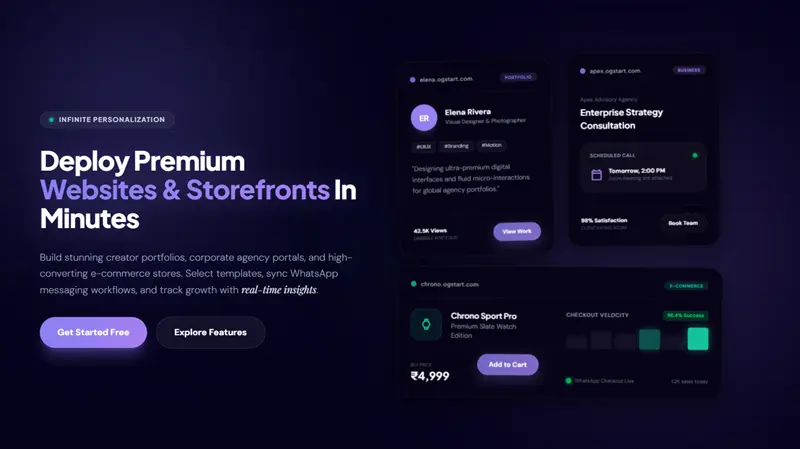
For service businesses aiming to convert visitors into clients, having a professional and clear online presence is the first step in this journey. This is precisely where OGStart comes in, allowing you to Launch Premium Websites & Storefronts - OGStart effortlessly, providing that crucial digital storefront for your services.
Step 3: Choose the Right CRM Platform
The market is flooded with CRM solutions, each offering a unique set of features. For service businesses, especially those just starting or operating on a lean budget, the key is to select a platform that is user-friendly, scalable, and offers the core automation capabilities you need without unnecessary complexity. Consider factors like:
- Ease of Use: A complicated system will lead to low adoption rates among your team.
- Core Features: Lead management, contact management, task automation, email automation, reporting.
- Integrations: Can it connect with your email provider, calendar, or other essential tools?
- Scalability: Can it grow with your business without requiring a complete overhaul?
- Cost: Look for tiered pricing that allows you to start small and upgrade as your business expands. Many CRMs offer free tiers for small teams or affordable starter plans.
Remember that while a CRM handles the client management, you still need a robust online presence. OGStart empowers you to build professional websites and landing pages that serve as the initial touchpoint for many of your CRM processes. This allows you to collect leads, provide information, and showcase your services effectively, all without having to pay like a big brand on day one.
Step 4: Automate Core Workflows
With your goals defined and platform chosen, it's time to implement automation. Start with your highest-impact, most repetitive workflows. Here are common areas for service businesses:
- Lead Nurturing: Automated email sequences for new inquiries, sending introductory information, case studies, or booking links.
- Appointment Scheduling: Integrate with tools like Calendly or Acuity Scheduling, sending automated confirmations and reminders.
- Client Onboarding: Trigger welcome emails, send links to onboarding forms, share introductory videos, or assign internal tasks to team members.
- Follow-ups and Check-ins: Schedule automated emails for post-service feedback, anniversary messages, or reminders for recurring services.
- Task Management: Automatically create tasks for sales or service teams based on client actions or deadlines.
This is where the magic of "set it and forget it" truly comes alive. Once configured, these workflows run continuously, ensuring no client or prospect interaction is missed. For more insights on how to keep leads engaged, you might find our article on Service Business CRM: Convert Visitors to Clients | OGStart particularly helpful.
Step 5: Integrate with Existing Tools
For a truly cohesive and efficient operation, your CRM shouldn't exist in a silo. Integrate it with your other essential business tools. Common integrations include:
- Email Marketing Platforms: Sync contact lists, track email opens and clicks within your CRM.
- Accounting Software: Link client data with invoicing and payment systems for a holistic financial view.
- Website Forms: Ensure all lead generation forms on your OGStart-powered website automatically feed into your CRM.
- Communication Tools: Connect with tools like Slack for internal notifications based on client activity.
- Analytics Platforms: Gain deeper insights by combining CRM data with website traffic and user behavior.
These integrations eliminate manual data entry, reduce errors, and provide a 360-degree view of each client, empowering your team with all the necessary context for every interaction. This step is critical for avoiding data fragmentation and ensuring your automation efforts are truly synergistic.
We believe in the power of seamless integration, allowing you to Let's Launch Your First Project | OGStart knowing that your online presence will work hand-in-hand with your backend systems, even as you start small.
Step 6: Train Your Team and Roll Out
Technology is only as effective as the people using it. Comprehensive team training is non-negotiable for successful CRM automation. Your team needs to understand not just how to use the system, but also why it's important and how it benefits their daily work. Create clear documentation, conduct hands-on training sessions, and encourage a culture of adoption.
- Key Training Areas:
- Basic navigation and data entry.
- Understanding automated workflows and triggers.
- Personalizing automated communications when necessary.
- Utilizing reporting and analytics features.
- Troubleshooting common issues.
A phased rollout can also be beneficial, starting with a pilot group before expanding to the entire team. Gather feedback, address concerns, and refine processes based on real-world usage. This collaborative approach fosters buy-in and ensures your CRM becomes an invaluable tool, not another administrative burden.
Step 7: Monitor, Analyze, and Optimize
CRM automation is not a set-it-and-forget-it solution; it's an ongoing process of refinement. Regularly monitor the performance of your automated workflows against the goals defined in Step 1. Your CRM's reporting features will be invaluable here, providing insights into conversion rates, response times, client feedback, and team efficiency.
We advise regularly asking:
- Are our automated emails achieving desired open and click-through rates?
- Has lead response time decreased?
- Are clients providing positive feedback on our automated onboarding?
- Are there new bottlenecks or opportunities for further automation?
Use this data to analyze what's working and what's not, and then optimize your workflows. This iterative process of monitoring, analyzing, and adjusting ensures your CRM automation remains effective, adapting to your evolving business needs and market changes. According to a study by Grand View Research, the global CRM market size is projected to expand significantly, driven by the increasing need for enhanced customer experience and operational efficiency, underscoring the importance of continuous optimization in this competitive landscape. Grand View Research
Comparing Manual vs. Automated Client Management
To further illustrate the tangible benefits, let us consider a direct comparison between managing client interactions manually versus leveraging a robust CRM automation system. We have systematically analyzed these two approaches across several critical business dimensions.
| Aspect | Manual Client Management | Automated CRM Management |
|---|---|---|
| Lead Capture & Follow-up | Inconsistent, prone to human error, slow response times, leads often forgotten. | Instant capture, automated personalized follow-up sequences, never miss a lead. |
| Client Onboarding | Disjointed, requires manual sending of documents, inconsistent experience, time-consuming. | Standardized, automated welcome emails, resource delivery, task assignment, smooth client journey. |
| Communication & Reminders | Ad-hoc, easily forgotten, can lead to client frustration due to missed appointments or updates. | Automated, timely reminders for appointments, project updates, personalized check-ins, builds trust. |
| Data Organization | Spreadsheets, notebooks, disparate systems, difficult to access a complete client history. | Centralized database, 360-degree client view, easy access to all interactions, documents, and notes. |
| Scalability | Requires proportional increase in administrative staff as client base grows, high operational costs. | Scales efficiently, handles increased volume with minimal additional effort, lower operational costs. |
| Insights & Reporting | Limited, difficult to aggregate data for strategic decisions, often relies on guesswork. | Comprehensive reports on sales pipeline, client retention, team performance, data-driven strategy. |
As this table clearly illustrates, the shift from manual processes to automated CRM management is not merely an upgrade; it's a fundamental transformation that positions your service business for sustainable growth and heightened profitability. This transformation allows you to better serve your clients while optimizing your internal operations, ensuring your business can upgrade only when growth demands it, not because of inefficient manual processes.
OGStart's Role in Your Automation Journey
You might be wondering how OGStart fits into this advanced CRM automation strategy. Our platform is your essential starting point, providing the digital foundation upon which all your automation efforts can flourish. Before you can automate lead capture, you need a professional website or landing page where those leads can be generated. Before you can automate client onboarding, you need a clear, accessible online presence to convey your services and value proposition.
OGStart offers:
- Affordable Launchpad: For just Rs. 99, you can get your service business online with a professional website or portfolio, allowing you to start small and test your ideas without significant upfront investment.
- Hosting and Infrastructure: We handle all the technical complexities of hosting, platform infrastructure, and website management, freeing you to focus on your core services and CRM strategy.
- Scalable Solutions: As your business grows and your CRM generates more leads and clients, your OGStart website can easily scale with you, providing the stable front-end required for your automation to succeed.
- Integration Readiness: Your OGStart website is designed to be easily integrated with various CRM tools and lead capture forms, ensuring a seamless flow of data into your chosen automation platform.
We provide the robust, professional online presence that serves as the entry point for your customers. From a well-crafted landing page designed to capture inquiries to a detailed service website showcasing your expertise, OGStart lays the groundwork for your CRM automation to thrive. You bring your own domain, giving your brand a unique identity, while we manage the engine that powers your online operations. This separation of concerns allows you to invest in your domain, which is your brand's unique address, and rely on OGStart for everything else without the burden of excessive initial costs.
The ROI of Integrated Growth: OGStart + CRM Automation
The synergy between a powerful online presence (like that provided by OGStart) and a well-implemented CRM automation system is a catalyst for unprecedented ROI. When these elements work in tandem, your service business benefits from:
- Rapid Lead-to-Client Conversion: Your professional OGStart website attracts prospects, and your automated CRM nurtures them efficiently, reducing the sales cycle.
- Maximized Client Lifetime Value: Automated engagement and personalized follow-ups fostered by your CRM ensure clients feel connected and are more likely to return and refer.
- Reduced Operational Costs: Less time spent on administrative tasks means your team can focus on delivering high-quality services, directly contributing to revenue. A report by Nucleus Research found that CRM applications deliver an average ROI of USD 8.71 for every dollar spent. Nucleus Research (While the report year is 2014, its core finding on significant CRM ROI remains a relevant industry benchmark.)
- Competitive Advantage: By offering a superior, streamlined client experience, you differentiate your service business in a crowded market.
- Empowered Decision-Making: With comprehensive data from both your website and CRM, you can make informed strategic decisions that drive growth.
Ultimately, this integrated approach allows you to achieve significant growth and profitability. You can launch your business online for Rs. 99, establish a strong digital footprint, and then strategically implement CRM automation to scale operations, enhance client satisfaction, and achieve remarkable ROI. It’s about building smart, not just big, and ensuring that every investment, from your initial website to your advanced automation, contributes directly to your bottom line.
Conclusion: Your Path to Automated Success Begins Here
The journey to boosting your service business ROI through CRM automation is a strategic, manageable process. By systematically defining your goals, understanding your customer's journey, selecting the right tools, and committing to continuous optimization, you can transform your operations and elevate your client relationships. This isn't just about adopting new technology; it's about adopting a smarter way of doing business that prioritizes efficiency, client satisfaction, and sustainable growth.
At OGStart, we provide the perfect foundation for this journey. We empower you to establish your vital online presence quickly and affordably, allowing you to connect with your audience and gather the essential data that fuels your CRM automation. You can launch fast, validate ideas affordably, and build a business designed for future success. Remember, you don't need to incur the expenses of a large enterprise on day one. Start lean, optimize smartly, and upgrade only when your business grows – with OGStart and strategic CRM automation, that growth is well within your reach.