
CRM Integration Traps: 5 Costly Blunders Service Businesses Must Avoid to Scale by 2026
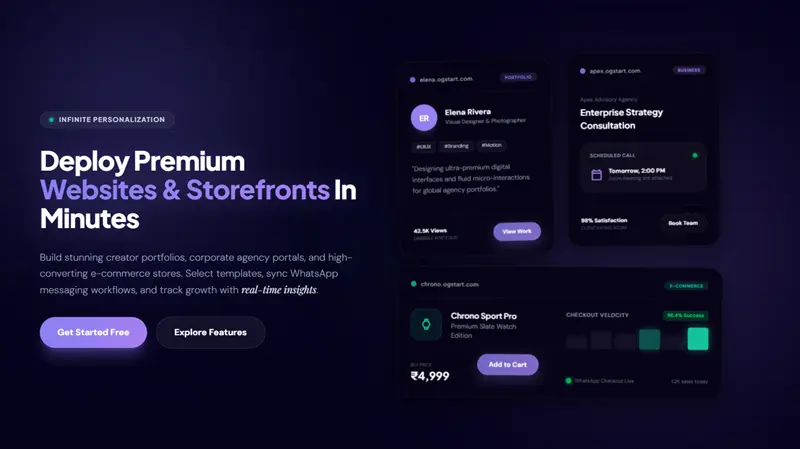
In today's fast-paced digital economy, service businesses, especially those aiming to scale rapidly by 2026, often look to technology as their growth engine. Customer Relationship Management (CRM) systems are at the heart of this digital transformation, promising streamlined operations, enhanced customer experiences, and robust growth. However, simply investing in a CRM isn't enough; effective CRM integration is where the real magic happens. Yet, many businesses, particularly those taking their first steps online or operating on lean budgets, fall into common, costly traps during this integration process. At OGStart.com, we understand the ambition of first-time founders, local businesses, and online sellers who want to launch fast and validate ideas affordably. Our goal is to empower you to build a strong online presence without the prohibitive upfront costs, allowing you to grow and upgrade only when your business truly demands it. This philosophy extends to every aspect of your business's digital journey, including critical integrations like CRM. We systematically analyzed the common pitfalls that can derail CRM integration efforts, turning a promising investment into a significant drain on resources and potential.
This comprehensive guide dives deep into the 5 most costly blunders service businesses must avoid when integrating CRM systems. By understanding these traps, you can navigate your growth path more wisely, ensuring your CRM truly serves as a catalyst for scaling, not a roadblock.
The Promise and Peril of CRM Integration for Growing Service Businesses
A well-integrated CRM system is more than just a contact database; it's a central nervous system for your business. It connects sales, marketing, and customer service, providing a unified view of every customer interaction. For service businesses, where client relationships are paramount, this unified view translates directly into better service delivery, improved client retention, and ultimately, sustainable growth. However, the path to seamless integration is fraught with challenges.
Why CRM Integration is Non-Negotiable for Scaling
As your service business grows, managing customer data across disparate spreadsheets, email inboxes, and individual team members becomes unsustainable. A properly integrated CRM centralizes this information, automating routine tasks and providing insights that drive strategic decisions. It enables personalized communication at scale, predicts customer needs, and helps identify your most profitable clients. Without it, scaling becomes a chaotic, inefficient, and ultimately, self-limiting endeavor.
Blunder 1: Skipping a Clear Strategy and Defined Goals
One of the most frequent and damaging mistakes businesses make is jumping into CRM integration without a clear strategy or well-defined objectives. We often observe businesses acquiring a CRM because "everyone else has one" or in the hope of achieving nebulous "more efficiency." This haphazard approach almost always leads to wasted time, budget overruns, and a system that fails to meet actual business needs.
The Cost of Haphazard Integration
Without specific goals, it’s impossible to measure success. How will you know if your CRM integration is working if you haven't defined what "working" looks like? A lack of clear objectives can lead to scope creep, where the project expands beyond its initial intentions, draining resources and delaying completion. This often results in a complex, over-customized system that no one fully understands or uses effectively. The Harvard Business Review emphasizes that successful CRM initiatives adopt a pragmatic, disciplined approach, focusing on specific pain points rather than attempting a complete business transformation from day one.
To illustrate the difference, let's compare two approaches:
| Feature | Haphazard Integration | Strategic Integration |
|---|---|---|
| Motivation | Following trends, vague desire for "better management." | Solving specific business problems (e.g., reducing lead response time, improving customer retention). |
| Planning | Minimal, focuses on software features. | Detailed, includes current process analysis, goal setting, and KPI definition. |
| Outcome | Underutilized system, frustration, cost overruns. | Measurable improvements, enhanced efficiency, clear ROI. |
| Scalability | Often creates silos, difficult to adapt. | Built with future growth in mind, flexible and adaptable. |
Blunder 2: Underestimating Data Quality and Migration Challenges
Imagine building a beautiful new house on a shaky foundation. That's essentially what happens when businesses attempt CRM integration with poor quality data. Data migration is consistently cited as one of the most significant hurdles in CRM projects, often underestimated in its complexity and potential for disaster.
The Garbage In, Garbage Out Dilemma
Your CRM is only as valuable as the data it contains. Migrating incomplete, outdated, duplicate, or inconsistently formatted data into your new system creates a "garbage in, garbage out" scenario. This "dirty data multiplication" can spread like a virus, leading to inaccurate reports, wasted resources, poor decision-making, and a damaged customer experience. For instance, duplicate customer records can cause confusion among your sales and service teams, leading to multiple contacts for the same person or missed opportunities for cross-selling.
Challenges extend beyond simple duplicates. Legacy systems often have proprietary formats, limited export capabilities, or complex data relationships that are difficult to translate into a new CRM. Organizations frequently underestimate the time and resources required to cleanse data *before* migration, leading to significant delays and cost overruns later on.
Overlooking Data Governance
Beyond the initial migration, many businesses fail to establish proper data governance policies. This means there's no clear plan for how data will be entered, maintained, and updated moving forward. Without standards, new dirty data will accumulate, eroding the value of your CRM over time. This includes defining acceptable formats, implementing validation rules, and conducting regular data audits.
Blunder 3: Neglecting User Adoption and Training
Even the most sophisticated CRM system, meticulously integrated with clean data, will fail if your team doesn't use it. We've seen countless instances where businesses invest heavily in technology, only for employees to revert to old habits – spreadsheets, sticky notes, or personal email lists. This lack of user adoption is a primary cause of CRM implementation failure, directly impacting ROI.
The Human Element in Tech Success
CRM success hinges on people, processes, and technology, and the "people" aspect is often the most challenging. Resistance to change is natural. Employees may feel threatened by new technology, perceive it as additional work, or simply not understand how it benefits their daily tasks. A lack of proper, role-specific training can exacerbate this, leaving users feeling frustrated and unwilling to engage with the new system.
Engaging users early in the process, from planning to testing, fosters a sense of ownership and ensures the system aligns with their workflows. Clear communication about the CRM's benefits, tailored to each team's responsibilities, is crucial for gaining buy-in. Management support and ongoing coaching also play a pivotal role in reinforcing usage and demonstrating the value of the CRM.
Blunder 4: Choosing the Wrong Integration Partner or Platform
The market is saturated with CRM options, each promising to be the "best" for your business. For small and growing service businesses, making the right choice, both in terms of the CRM platform and any external integration partners, is critical. A misstep here can lead to a system that doesn't scale, lacks essential features, or becomes a costly headache to maintain.
The Allure of DIY vs. Expert Assistance
While the idea of "doing it yourself" can be appealing for cost-conscious businesses, especially for core website setup (which is exactly what OGStart empowers you to do affordably), CRM integration often requires a level of expertise that goes beyond basic setup. Many businesses underestimate the complexities of integrating a CRM with existing systems like accounting software, marketing automation tools, or their website/e-commerce platform. This can lead to inefficient workflows, data silos, and costly rework.
Selecting a CRM that aligns with your industry and operational needs is paramount. For service businesses, features like robust scheduling, project management, and detailed client history tracking are often more important than, for example, complex inventory management. Similarly, if your online presence is built on an accessible platform like OGStart.com, you'll want a CRM that offers straightforward integration options that can grow with you. As a business grows and its needs evolve, the ability of the CRM to integrate with other essential business systems through APIs (Application Programming Interfaces) or middleware becomes increasingly important.
Scalability and Flexibility Considerations
As your business expands, your CRM needs will evolve. Choosing a platform that offers scalability is crucial to avoid having to rip and replace your system a few years down the line. A scalable CRM should accommodate increased user numbers, growing data volumes, and new functionalities without significant performance degradation or prohibitive costs. Flexibility, in terms of customization and integration capabilities, ensures that your CRM can adapt to changes in your business processes and future technological advancements.
Blunder 5: Ignoring Security, Compliance, and Ongoing Maintenance
In an age of heightened cyber threats and stringent data privacy regulations, neglecting CRM security and compliance is not just a blunder—it's a critical business risk. Your CRM holds your most valuable asset: customer data. A breach can lead to severe financial penalties, reputational damage, and a complete erosion of customer trust.
Protecting Your Business and Your Customers
CRM systems store a wealth of sensitive information, including contact details, purchase histories, communication records, and sometimes even payment or health data. Protecting this data requires a multi-layered approach to security, including strong user authentication, data encryption, regular system updates, and continuous monitoring for suspicious activities. When selecting a CRM, prioritizing providers with robust security certifications (like ISO 27001) and transparent security practices is vital.
Beyond security, compliance with data privacy regulations like GDPR, CCPA, or India's Digital Personal Data Protection Act (DPDP Act) is non-negotiable. Failure to comply can result in hefty fines and legal action. Businesses must understand what data they are collecting, how it is being used, and ensure that their CRM practices align with these legal requirements. This often involves clear consent mechanisms, data retention policies, and robust access controls within the CRM itself.
The Long-Term View of CRM Health
CRM integration is not a one-time project; it requires ongoing maintenance and optimization. Many businesses neglect this crucial aspect, treating the CRM as a "set it and forget it" solution. Over time, data can become stale, integrations can break, and the system can become less effective if not regularly reviewed and updated.
Ongoing maintenance includes regular data cleansing, monitoring system performance, applying security patches, and refining workflows to match evolving business needs. Without this continuous care, your CRM can quickly become an outdated, unreliable system that hinders rather than helps your growth.
How OGStart Helps You Build a Solid Foundation for CRM Success
At OGStart.com, we believe that launching your business online should be affordable and stress-free. We empower first-time founders, Instagram and WhatsApp sellers, freelancers, and local businesses to create professional websites, online stores, or portfolios for just INR 99, with the flexibility to upgrade only as your business grows. This "start small, launch fast, validate affordably" philosophy perfectly positions you to avoid many of the CRM integration pitfalls we've discussed.
By starting with an affordable, easy-to-manage online presence on OGStart, you can focus on building your core service offerings and acquiring your first customers. You don't need to overcomplicate things with an enterprise-level CRM on day one. Instead, you can focus on establishing clean data habits and streamlined internal processes from the outset. As your customer base expands, and your OGStart website or e-commerce store drives more traffic and transactions, the need for a robust CRM becomes clearer. At this point, you'll have a solid foundation of operational experience and clean data, making the eventual CRM selection and integration process much smoother and more effective.
We handle the hosting, infrastructure, and website management, freeing you to concentrate on your customers and operations. This allows you to mature your customer relationship strategies organically, so when you are ready to integrate a CRM, it's a strategic decision driven by genuine growth, not guesswork. This approach minimizes upfront risk and ensures that your CRM investment is made at the right time, for the right reasons, maximizing its potential for scalable growth.
Our Systematic Approach to Avoiding CRM Integration Pitfalls
We systematically analyzed these costly blunders to provide you with actionable insights. Our experience working with numerous growing businesses has shown that anticipating these challenges is half the battle. By prioritizing a clear strategy, meticulous data handling, robust user training, careful platform selection, and unwavering attention to security and ongoing maintenance, you can transform CRM integration from a potential liability into a powerful asset.
The journey to scaling a service business is dynamic, and technology should be an enabler, not a burden. By launching your online presence affordably with OGStart and consciously avoiding these CRM integration traps, you position your business for resilient, sustainable growth in an increasingly competitive digital landscape.
Conclusion
CRM integration is a pivotal step for any service business aspiring to scale effectively by 2026. However, as we have explored, the path is fraught with potential pitfalls. From neglecting a clear strategy and underestimating data challenges to overlooking user adoption, choosing the wrong platform, and ignoring critical security and compliance needs, these blunders can severely impede growth and lead to significant financial drain.
The key to success lies in a proactive, strategic approach. Define your goals precisely, prioritize data quality from day one, invest in comprehensive user training and change management, select a scalable and compatible CRM, and maintain a vigilant focus on security, compliance, and ongoing system health. By embracing these principles, your CRM will become the powerful engine it's meant to be, propelling your service business toward sustainable growth and enhanced customer relationships.
Remember, your journey starts lean and smart. With platforms like OGStart.com, you can build your online foundation affordably and scale intentionally, ensuring that every technological investment, including your CRM integration, is a stepping stone to future success, not a costly trap. Avoid these blunders, and set your service business on a clear trajectory for unparalleled growth and customer satisfaction.
For further reading on strategic CRM implementation, we recommend exploring the insights from the Harvard Business Review on "CRM Done Right", which emphasizes a pragmatic and disciplined approach to CRM initiatives. Additionally, the U.S. Chamber of Commerce offers best practices for implementing CRM in small businesses, focusing on clear goals and team training.