
Small Business Accessibility: Your Ethical Edge to Outperform Competitors & Capture 15% More Market
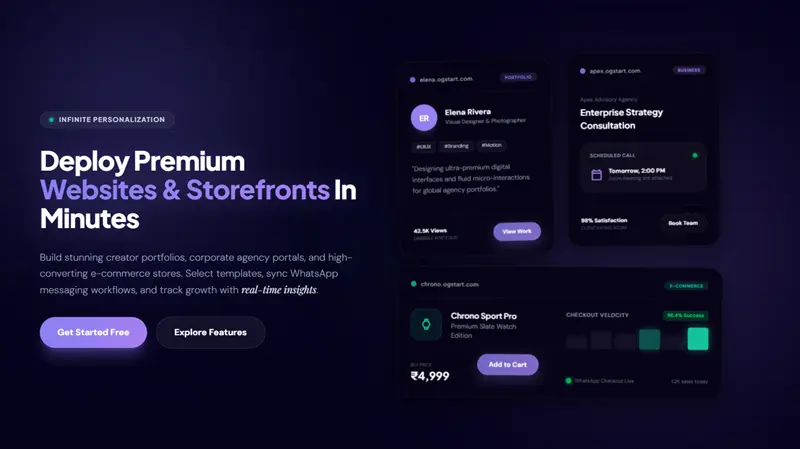
In today's dynamic digital landscape, small businesses are constantly seeking an edge to stand out, attract more customers, and secure long-term growth. We systematically analyzed the strategies that not only drive success but also embody responsible business practices. Among these, web accessibility has emerged as a critical differentiator, far beyond a mere compliance checkbox. It is an ethical imperative that simultaneously unlocks significant market opportunities, empowering businesses to capture a projected 15% more market share by 2026. For founders using platforms like OGStart, which simplify the initial launch of an online store or business website, understanding and implementing accessibility is a powerful way to ‘start small’ yet ‘think big’ from day one.
What Exactly is Web Accessibility, and Why Should Your Small Business Care?
Web accessibility refers to the practice of designing and developing websites so that people with disabilities can perceive, understand, navigate, and interact with them effectively. This includes individuals with visual, auditory, physical, speech, cognitive, and neurological disabilities. But its impact extends far beyond this specific group.
When we talk about web accessibility, we’re discussing a user experience that benefits everyone. Consider temporary limitations, like a broken arm, or situational challenges, such as trying to access a website on a bright screen in direct sunlight. An accessible website is designed with flexible approaches to accommodate diverse needs, ensuring your message reaches the widest possible audience. For small businesses leveraging affordable platforms like OGStart to launch their first online presence, embedding accessibility from the outset is not a luxury; it’s a fundamental building block for inclusive growth.
The Ethical Imperative: Building an Inclusive Digital World
The call for web accessibility is first and foremost an ethical one. We believe that every individual deserves equal access to information, products, and services, regardless of their ability. Excluding a segment of the population from your online offerings not only undermines societal values of inclusion but also deprives your business of potential customers.
For entrepreneurs and small business owners, operating with integrity and a commitment to social responsibility builds a stronger, more respected brand. Customers increasingly seek out businesses that align with their values, and demonstrating a genuine commitment to inclusivity fosters deep trust and loyalty. By consciously designing for accessibility, you’re not just adhering to guidelines; you’re actively contributing to a more equitable digital world.
The Legal Landscape: Avoiding Costly Pitfalls
Beyond ethics, there is a compelling legal argument for web accessibility. In many countries, legislation mandates equal access for people with disabilities in public accommodations, and courts have increasingly interpreted websites as “places of public accommodation.” In the United States, the Americans with Disabilities Act (ADA) is the primary federal law. While there isn’t a specific federal law dedicated solely to website accessibility for private businesses, the Department of Justice (DOJ) maintains that the ADA’s Title III provisions apply to websites, requiring them to be accessible.
The Web Content Accessibility Guidelines (WCAG), developed by the World Wide Web Consortium (W3C), serve as the internationally recognized technical standard for web accessibility. Courts and regulatory bodies frequently refer to WCAG 2.1 Level AA as the benchmark for compliance.
We’ve observed a significant rise in web accessibility lawsuits, particularly targeting e-commerce businesses. In fact, approximately 77% of all website accessibility lawsuits target online retail businesses, where the financial damages from inaccessible transactions are clear and demonstrable. Small businesses are far from exempt; a substantial portion of these lawsuits are filed against companies with annual revenues under USD 25 million. Ignoring accessibility can lead to expensive legal battles, settlement costs averaging around USD 100,000 per case, and reputational damage – a burden that can be particularly heavy for businesses just starting out.
The Business Imperative: Unlocking Growth and Market Share
While the ethical and legal aspects are clear, the business case for web accessibility is equally powerful, translating directly into increased revenue, enhanced brand loyalty, and a competitive advantage. For businesses launching with OGStart for Rs. 99, this means building a foundation for growth that is inherently more robust.
Tapping into a Trillion-Dollar Market
The global “disability market” is a powerhouse that businesses often overlook. We’ve analyzed multiple reports indicating that this market, including people with disabilities and their extended networks (friends, family, and caregivers whose purchasing decisions are influenced), represents a staggering USD 13 trillion to USD 18.3 trillion in annual disposable income. This is not a niche segment; it’s one of the largest consumer groups in the world, with immense purchasing power.
By making your website accessible, you open your doors to this vast, underserved demographic. Research shows that 69% of disabled online consumers click away from websites they find difficult to use, and a significant 83% limit their shopping exclusively to sites they already know are accessible. This means that businesses with accessible websites are not just retaining customers; they are actively capturing market share that competitors with inaccessible sites are losing. The goal of capturing 15% more market by 2026 becomes highly achievable by simply serving a loyal customer base that is actively seeking inclusive brands.
Supercharging Your SEO and Online Visibility
We’ve consistently observed a strong correlation between web accessibility and improved search engine optimization (SEO). While accessibility isn't a direct ranking factor for Google, it significantly strengthens the signals that search engines reward.
Many accessibility best practices align perfectly with SEO best practices:
- Semantic HTML: Clear, well-structured HTML (using proper headings, lists, and landmarks) helps screen readers and search engine crawlers understand your content hierarchy.
- Alternative Text for Images: Providing descriptive “alt text” for images helps visually impaired users understand the content and gives search engines valuable context for image indexing.
- Descriptive Link Text: Using clear, contextual anchor text for links benefits screen reader users and helps search engines understand the destination of the link.
- Video Captions and Transcripts: These not only make video content accessible to individuals with hearing impairments but also provide crawlable text for search engines, boosting discoverability.
- Clear Readability: Simple, concise language and good contrast ratios improve usability for everyone and are favored by search engines for better user experience.
Accessible sites tend to rank better and experience a surge in organic traffic. One study even highlights that accessible websites see an average 23% increase in organic traffic once barriers are removed. By making your site accessible, you’re essentially optimizing for both human users and search engine bots with a single, integrated effort.
Enhancing Brand Reputation and Customer Loyalty
In a competitive marketplace, reputation is everything. We know that consumers are increasingly conscious of a brand’s social responsibility. Prioritizing accessibility demonstrates ethical leadership and a commitment to inclusivity, which significantly improves public perception.
When customers feel valued and included, they are far more likely to trust your business and return for future purchases. An accessible website sends a clear message: “We care about all our customers.” This builds a powerful connection, fostering loyalty that translates into repeat business and positive word-of-mouth referrals. Businesses that embrace accessibility distinguish themselves as forward-thinking and socially conscious, strengthening their brand in the long term.
Improved User Experience for Everyone
The benefits of accessibility are not confined to people with disabilities. We’ve found that designing for the most inclusive experience often leads to a better experience for all users. Features like clear navigation, easy-to-read fonts, logical content structure, and keyboard compatibility enhance usability for everyone, including those with slow internet connections, using mobile devices, or simply seeking a smooth, intuitive browsing experience.
These improvements translate into tangible business benefits: lower bounce rates, longer time on site, and higher engagement. When users find your website easy to navigate and understand, they are more likely to stay longer, explore more content, and convert into customers. This universal usability is a cornerstone of effective digital strategy.
Common Accessibility Barriers and How to Overcome Them
Based on our extensive experience, many accessibility barriers are surprisingly common and, more importantly, often simple to fix. Identifying and addressing these early on can prevent significant headaches down the line:
- Lack of Alternative Text for Images: Images without descriptive alt text are invisible to screen readers, excluding visually impaired users.
Solution: Always provide concise, descriptive alt text that conveys the image’s purpose or content. - Poor Color Contrast: Low contrast between text and background can make content unreadable for users with visual impairments or color blindness.
Solution: Use sufficient contrast ratios (WCAG 2.1 AA recommends at least 4.5:1 for normal text). Tools like WebAIM’s Color Contrast Checker can help. - Inaccessible Forms: Forms without clear labels, instructions, or proper error handling can be impossible to complete for users relying on assistive technologies.
Solution: Ensure all form fields have visible, associated labels, provide clear instructions, and offer helpful error messages. - Keyboard Navigation Issues: Many users with motor disabilities rely solely on keyboard navigation. If your site cannot be fully navigated using only the Tab key and Enter key, it’s inaccessible.
Solution: Test your entire site using only a keyboard. Ensure all interactive elements are reachable and indicate focus clearly. - Missing Captions or Transcripts for Media: Audio and video content without captions (for hearing impaired) or transcripts (for all users) exclude a significant audience.
Solution: Always include accurate captions for videos and transcripts for all audio content. - Unclear Link Text: Generic link text like “click here” provides no context to screen reader users or search engines.
Solution: Use descriptive link text that indicates the link’s destination or purpose.
Practical Steps Towards an Accessible Online Presence with OGStart
Building an accessible website doesn’t require a massive budget or deep technical expertise, especially when you’re starting with a user-friendly platform like OGStart. We advocate for a pragmatic approach that integrates accessibility into your routine workflow.
Foundational Design Choices
When creating your online store, portfolio, or business website with OGStart, pay attention to these fundamental design elements:
- Visual Clarity: Choose clear, readable fonts and maintain sufficient contrast between text and background colors. This is easily controllable within most website builders and themes.
- Logical Structure: Use headings (H1, H2, H3) to organize your content logically. This helps screen readers and all users understand the hierarchy of information. OGStart’s intuitive editors make this simple.
- Responsive Design: Ensure your website is fully responsive, adapting seamlessly to various screen sizes (desktops, tablets, mobile phones). OGStart platforms are inherently designed to be mobile-friendly, which contributes to overall accessibility.
Content is King (and Accessible)
Even with OGStart handling your hosting and infrastructure, the content you create is entirely in your hands, and it’s where you can make a huge impact on accessibility:
- Descriptive Alt Text: For every image you upload, take a moment to write a brief, meaningful alternative text. Describe what the image conveys, not just what it is.
- Media Accessibility: If you include videos, ensure they have accurate captions. For audio, provide transcripts. This expands your reach and improves SEO.
- Clear Language: Write clearly and concisely. Avoid jargon where possible. Break up long paragraphs with bullet points and subheadings.
- Meaningful Links: Instead of “read more,” use “Learn about our new product features.”
Testing Your Accessibility
Regularly testing your website is crucial. We recommend a combination of automated and manual checks:
- Automated Tools: Utilize free tools like WAVE Web Accessibility Evaluation Tool or Google Lighthouse to identify common issues quickly.
- Manual Keyboard Test: Try navigating your entire website using only your keyboard (Tab, Shift+Tab, Enter, Spacebar). Can you reach all links, buttons, and form fields? Is the focus indicator visible?
- Screen Reader Simulation: Basic screen reader extensions for browsers can give you a rough idea of how your site sounds to a visually impaired user.
Remember, OGStart empowers you to focus on your core business and content without worrying about complex backend management. This freedom allows you to dedicate energy to making your user-facing elements as accessible as possible.
| Feature | Inaccessible Practice | Accessible Practice | Benefit |
|---|---|---|---|
| Images | <img src="product.jpg"> (no alt text) | <img src="product.jpg" alt="Close-up of organic, freshly baked sourdough bread"> | Screen readers describe images; improved SEO for image search. |
| Text Contrast | Light grey text on a white background (low contrast) | Dark grey text on a light grey background (WCAG AA compliant contrast) | Readability for users with low vision; easier on eyes for all. |
| Navigation | Hidden skip links; difficult keyboard navigation | Visible skip-to-content links; all elements keyboard navigable with clear focus indicator | Efficiency for screen reader users and those unable to use a mouse. |
| Forms | Placeholder text as labels; complex error messages | Visible labels outside fields; clear, simple error messages next to fields | Usability for screen reader users and those with cognitive disabilities. |
| Video | Video autoplaying with no captions | Video with pause control, captions, and an optional transcript | Access for hearing impaired; flexibility for all users. |
| Links | <a href="#">Click here</a> | <a href="/about-us">Learn more about our company</a> | Context for screen readers and SEO; user knows where link leads. |
Addressing Misconceptions: Accessibility Isn’t Just for Big Brands
A common misconception we encounter is that web accessibility is an expensive, complex endeavor reserved for large corporations with vast resources. We want to emphatically debunk this myth. While comprehensive accessibility audits can involve significant investment, many foundational steps are straightforward and often involve best practices that benefit all users. For small businesses leveraging platforms like OGStart, where the technical heavy lifting of hosting and infrastructure is managed, the focus shifts to accessible content creation – a much more manageable task.
Furthermore, the cost of proactive accessibility measures pales in comparison to the potential financial and reputational damage of an accessibility lawsuit. The time, legal fees, and mandated remediation after a lawsuit can cripple a small business. Investing early in accessible design is a strategic financial decision, not just a moral one.
Future-Proofing Your Business in a Digital-First World
The digital landscape is continuously evolving, and so are accessibility standards. The latest iteration of the guidelines, WCAG 2.2, builds upon previous versions, further refining what it means to create an inclusive web experience. Businesses that embrace accessibility now are not just meeting current demands but are actively future-proofing their online presence against evolving regulations and increasing consumer expectations for inclusivity.
As technology advances, assistive technologies become more sophisticated, and user expectations for seamless digital interactions rise. Staying ahead of the curve by integrating accessibility into your core strategy ensures your business remains relevant, competitive, and admired in an increasingly connected world. This forward-thinking approach, coupled with OGStart’s ability to handle hosting, infrastructure, and website management, positions your small business for sustainable, inclusive growth.
Conclusion: Your Ethical Edge to Outperform
We’ve systematically explored how web accessibility transcends mere compliance to become a powerful ethical and business driver for small businesses. From tapping into a multi-trillion-dollar underserved market and supercharging your SEO, to building an unshakeable brand reputation and enhancing user experience for everyone, the benefits are undeniable. By consciously building an accessible online presence, you’re not just doing the right thing; you’re making a smart business decision that promises significant returns, including the potential to capture 15% more market by 2026.
For entrepreneurs ready to ‘launch fast’ and ‘start small’ without compromising on future growth, platforms like OGStart provide the ideal foundation. By handling the complexities of website infrastructure for as little as Rs. 99, OGStart empowers you to focus your energy on creating an inclusive, high-quality online experience. This approach allows you to validate your ideas affordably, minimize risk, and confidently build a business that is ethical, competitive, and truly open to everyone. Make accessibility a cornerstone of your digital strategy, and watch your business thrive.