
The Ethical Edge: 10 Accessibility Non-Negotiables for Small Service Businesses to Win Trust & Thriv
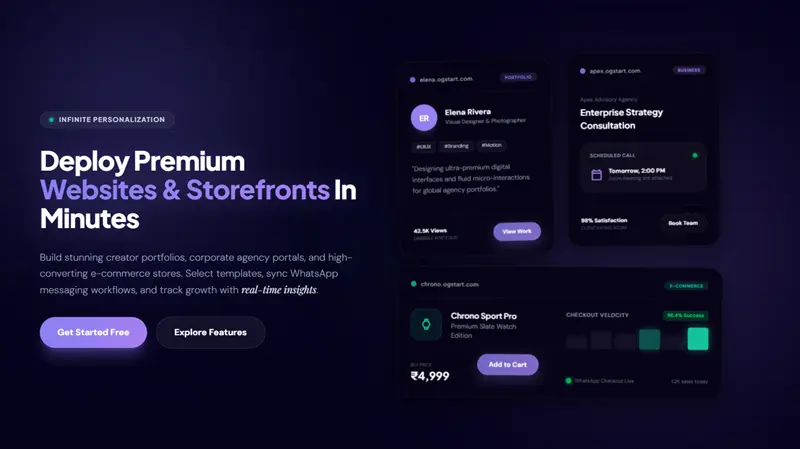
In the dynamic digital landscape of 2026, building an online presence is no longer just about visibility; it's about inclusivity. For small service businesses, establishing trust and ensuring long-term success hinges on creating digital experiences that are accessible to everyone. This isn't merely a matter of compliance; it's an ethical imperative and a strategic business advantage. At OGStart.com, we systematically analyzed the evolving digital ecosystem and recognize that true success for first-time founders, freelancers, and local businesses begins with a foundation of accessibility. We believe that by embracing accessibility, you not only broaden your market but also cultivate a reputation for integrity and thoughtfulness that resonates deeply with your audience. This masterclass outlines ten non-negotiable accessibility principles that will empower your small service business to thrive by design.
The Ethical Edge: Why Accessibility is Your Business Superpower
Many entrepreneurs launching their business online for the first time focus on core services, branding, and marketing. While these are crucial, we have observed that neglecting digital accessibility can lead to missed opportunities, reputational damage, and even legal challenges. Instead, we advocate for viewing accessibility as a proactive strategy that offers a significant "ethical edge."
Expanding Your Market Reach Exponentially
Consider the sheer size of the audience you might be excluding. Globally, approximately 1.3 billion people live with some form of disability. This isn't a niche market; it's a substantial segment of potential customers, clients, and partners. By making your website, online store, or portfolio accessible, you are opening your doors to individuals who might otherwise be unable to engage with your services. This expanded reach translates directly into increased traffic, engagement, and ultimately, revenue. We see it as unlocking a vast, untapped market for your services.
Boosting Brand Reputation and Trust
In today's interconnected world, consumers are increasingly conscious of a brand's values. Businesses that prioritize inclusivity and demonstrate a commitment to serving all individuals foster a stronger, more positive brand image. We have found that an accessible website communicates compassion, professionalism, and a dedication to user experience for every single visitor. This builds deep trust and loyalty, positioning your small business as a leader in ethical digital practices. According to the W3C Web Accessibility Initiative, accessible design enhances brand perception and is crucial for an organization's ability to innovate and enhance its brand.
Mitigating Legal Risks and Protecting Your Business
While the ethical case for accessibility is compelling, the legal landscape also underscores its importance. Numerous countries and regions have laws requiring digital accessibility, with enforcement becoming increasingly rigorous. We've seen reports indicating thousands of web accessibility lawsuits filed annually, with a significant number targeting small businesses. For instance, in 2025 alone, 5,114 ADA digital accessibility lawsuits were filed nationwide in the US. Many of these legal challenges could be avoided by proactively implementing accessibility standards from the outset. By launching your business online with accessibility in mind, you safeguard your venture from costly litigation and penalties, allowing you to focus on growth.
Enhancing User Experience for Everyone
An accessible website isn't just better for people with disabilities; it's better for everyone. We know that accessibility features often improve the overall user experience for all visitors, including those using mobile devices, older individuals with changing abilities due to aging, or people in challenging situations like bright sunlight or with slow internet connections. Clear navigation, high-contrast text, and keyboard compatibility benefit all users, making your site more intuitive and pleasant to use. This universal usability leads to higher engagement rates and reduced bounce rates.
Understanding Web Accessibility Standards: The WCAG Framework
To navigate the world of digital accessibility, we look to internationally recognized standards. The most widely adopted guidelines are the Web Content Accessibility Guidelines (WCAG), developed by the World Wide Web Consortium (W3C). WCAG is built on four core principles: Perceivable, Operable, Understandable, and Robust (POUR). These principles guide how content should be presented, interacted with, understood, and made compatible with various technologies. While WCAG 3.0 is under development, WCAG 2.1 Level AA remains the most commonly accepted benchmark for digital accessibility worldwide, and many policies, such as Harvard University's Digital Accessibility Policy, align with WCAG 2.1 Level AA. We recommend aiming for WCAG 2.1 Level AA conformance as a foundational goal for any small service business.
10 Accessibility Non-Negotiables for Small Service Businesses
We have distilled the essence of accessible design into ten actionable non-negotiables. Implementing these will not only help you win trust but also provide a robust foundation for your online business.
1. Accessible Website Platform Choice
The very first step is crucial: choose a platform designed with accessibility in mind. We developed OGStart to ensure that the underlying infrastructure and content management system support best accessibility practices. Starting with an accessible foundation means you're not fighting an uphill battle from day one. Our platform handles much of the technical heavy lifting, allowing you to focus on your content and services while knowing the basics are covered. When you launch your business online for Rs. 99, you're investing in a system that makes accessibility achievable, not an afterthought.
2. Clear and Consistent Navigation
A website should be easy to navigate for everyone, regardless of how they access it. We prioritize intuitive menu structures, clear page hierarchies, and consistent placement of navigation elements. Ensure that your main navigation, sub-menus, and internal links follow a logical flow that is easy to understand and predict. This allows users to find information quickly and efficiently, reducing frustration and enhancing their experience. Unclear navigation can be a significant barrier, especially for users relying on screen readers or those with cognitive disabilities.
3. Descriptive Alt Text for Images
Images are vital for engagement, but they must also be accessible. We emphasize the importance of providing descriptive "alt text" (alternative text) for all meaningful images. Alt text is a brief, accurate description of an image's content and purpose, read aloud by screen readers for users who cannot see the image. Without it, images become invisible barriers. For decorative images, an empty alt attribute (`alt=""`) is appropriate. We encourage our users to consistently provide alt text, turning visual content into inclusive content.
4. Keyboard Navigability
Not everyone uses a mouse. Many individuals, including those with motor disabilities or visual impairments, navigate websites using only a keyboard or assistive technologies that mimic keyboard input. We ensure that all interactive elements on your website – links, buttons, forms, and navigation menus – are fully accessible and operable via keyboard. Users should be able to tab through content in a logical order, and every action possible with a mouse should also be possible with a keyboard.
5. Proper Heading Structure (H1, H2, H3)
Headings are not just for visual styling; they provide crucial structure and context for screen reader users. We advocate for using semantic HTML headings (H1, H2, H3, etc.) correctly to outline your content. Your page should have one main H1 (the page title), followed by H2s for major sections, and H3s for sub-sections. This hierarchical structure acts like a table of contents, allowing users to quickly understand the page's organization and jump to relevant sections. Misusing headings (e.g., using an H2 for styling instead of structure) creates confusion and accessibility barriers.
6. High Contrast Colors and Legible Fonts
Readability is paramount for all users. We insist on ensuring sufficient color contrast between text and its background to make your content easy to read for individuals with low vision or color blindness. Tools are readily available to check contrast ratios. Similarly, choose legible fonts and ensure text is resizable without loss of functionality or content. Avoid overly decorative or thin fonts that can be difficult to decipher. This simple design choice dramatically improves the experience for a wide audience.
7. Accessible Forms and Input Fields
Forms are often the gateway for interaction on service business websites – booking appointments, requesting quotes, or signing up for newsletters. We stress that forms must be accessible. This includes clear labels for all input fields, logical tab order, and helpful error messages that are programmatically associated with the fields they refer to. Users should receive clear instructions and feedback, especially when filling out required information or correcting errors.
8. Captioning and Transcripts for Multimedia
If your service business uses videos, podcasts, or other multimedia content, we require you to provide captions for audio and transcripts for video. This ensures that individuals who are deaf or hard of hearing can access the audio content, and those who are blind or visually impaired can understand the visual information through transcripts. Additionally, captions and transcripts benefit a much wider audience, including people watching in noisy environments, those who prefer to read, or those learning a new language.
9. Clear and Concise Language
Complexity can be an accessibility barrier. We encourage the use of clear, concise, and straightforward language. Avoid jargon where simpler terms suffice, and break down complex information into smaller, digestible paragraphs. This approach benefits individuals with cognitive disabilities, those with limited literacy, and anyone simply looking for information quickly. Effective communication is inherently accessible communication.
10. Regular Accessibility Audits and Testing
Accessibility is not a one-time fix; it's an ongoing commitment. We advise small businesses to conduct regular accessibility audits and user testing, ideally with individuals with disabilities. Automated tools can catch many issues, but manual testing provides invaluable insights into real-world user experiences. We recommend integrating this into your website maintenance routine to ensure your digital presence remains inclusive over time. The Harvard University Digital Accessibility Services encourages reporting accessibility concerns to improve digital experiences.
How OGStart.com Simplifies Your Accessibility Journey
At OGStart.com, our core mission is to help first-time founders, Instagram and WhatsApp sellers, freelancers, and local businesses launch their online presence affordably and efficiently. We understand that diving into the complexities of web accessibility can seem daunting, especially when you're just starting. That's why we've engineered our platform to streamline the process, allowing you to focus on your services while we handle the technical backbone.
Built-in Accessibility Features and Infrastructure
When you create an online store, portfolio, or business website with OGStart, you inherit a robust infrastructure that supports many essential accessibility features. We manage the hosting, ensure the platform code adheres to web standards, and provide templates designed with accessibility principles in mind. This means you don't need to worry about complex coding or server configurations to meet basic accessibility requirements. We facilitate clean HTML output, keyboard-friendly navigation components, and structured content elements by default.
Empowering Small Businesses to Start Right, Affordably
Our "Launch your business online for Rs. 99. Upgrade only when your business grows" philosophy extends directly to accessibility. We believe that an ethical business starts accessible, not just when its budget expands. By using OGStart, you can validate your ideas affordably with a website that is already better positioned for inclusivity than many premium, custom-built sites. You bring your domain, and we provide the accessible, managed platform, removing a significant barrier for small service businesses eager to do things right from the start.
| Feature/Aspect | Accessible Website (OGStart-enabled) | Non-Accessible Website (Typical, Unoptimized) |
|---|---|---|
| Market Reach | Broader audience, including 1.3 billion people with disabilities | Limited audience, potentially excluding a significant demographic |
| Brand Perception | Ethical, inclusive, trustworthy, modern | Indifferent, potentially negligent, outdated |
| Legal Risk | Significantly reduced risk of lawsuits | High risk of ADA and other accessibility-related lawsuits |
| SEO & Discoverability | Improved search engine ranking due to structured, well-coded content | Hindered SEO, potentially lower search visibility |
| User Experience | Enhanced for all users, including those with temporary/situational limitations | Frustrating for many, leading to higher bounce rates |
| Cost to Implement (Initial) | Low initial cost with platforms like OGStart (Rs. 99) | Potentially high retrofitting costs later |
The Future is Inclusive: Starting Your Accessible Journey Today
As we move further into 2026 and beyond, the digital landscape will continue to evolve, but the demand for inclusivity will only strengthen. We recognize that an accessible web is not just a trend; it's the standard. Small service businesses that embrace this reality now will be better positioned to adapt, innovate, and lead in their respective niches. The good news is that starting your accessible journey doesn't require a massive budget or a team of developers. It requires awareness, commitment, and the right tools.
We are dedicated to providing the necessary platform and guidance for you to build a business that is not only successful but also deeply ethical and widely respected. Your Rs. 99 launch on OGStart is more than just a website; it's a statement of your values and a commitment to serving every potential client. By integrating these ten accessibility non-negotiables, you are not just ticking boxes; you are building a more robust, trustworthy, and ultimately more prosperous business.
Let's build an internet that truly works for everyone. Your ethical edge starts here, with an accessible foundation for your small service business. Launch fast, start small, and grow responsibly with OGStart.com.