
The Invisible Goldmine: How Accessibility Transforms 6 Small Service Businesses into Unbeatable Mark
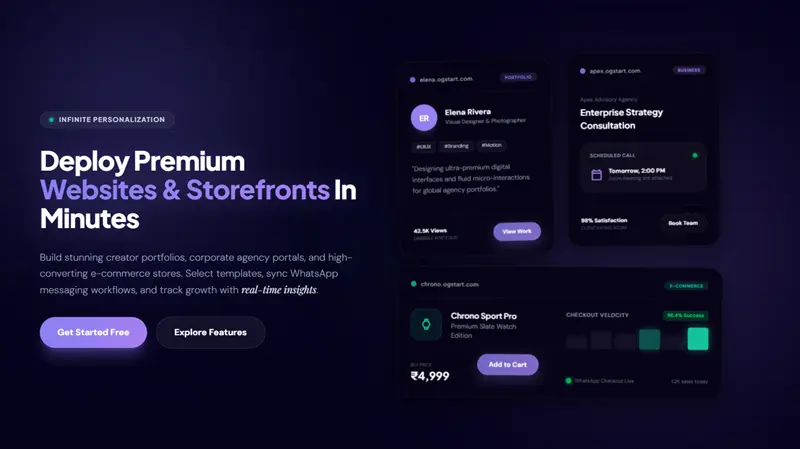
In the rapidly evolving digital landscape of 2026, where online presence is no longer a luxury but a fundamental necessity for every business, a silent revolution has been taking place. For small service businesses, in particular, embracing digital accessibility has emerged as an "invisible goldmine" – a strategic differentiator transforming them into unbeatable market leaders. At OGStart.com, we believe that starting small shouldn't mean limiting your potential. This article systematically analyzes how prioritizing accessibility from day one, often facilitated by affordable, accessible platforms like ours, not only fosters inclusivity but also unlocks unprecedented growth, market reach, and brand loyalty.
We delve into the compelling case for web accessibility, moving beyond mere compliance to reveal its profound business advantages. We showcase six diverse small service businesses that have leveraged accessibility to carve out dominant positions in their respective markets. For the first-time founder, the Instagram seller, or the local business owner testing a new idea, understanding this often-overlooked aspect of online presence can be the key to sustainable success.
Understanding the Unseen Power of Digital Accessibility
Digital accessibility ensures that websites, online tools, and technologies are designed and developed so that people with disabilities can use them. This means individuals with visual, auditory, physical, speech, cognitive, and neurological disabilities can perceive, understand, navigate, and interact with the web. While often viewed through the lens of legal compliance or corporate social responsibility, we have observed that accessibility is, in fact, a powerful engine for business growth, particularly for small service providers operating with limited resources.
The Americans with Disabilities Act (ADA), enacted in 1990, mandates that places of public accommodation be accessible to disabled individuals. Increasingly, this interpretation extends to websites, with the Department of Justice (DOJ) affirming that ADA applies to businesses conducting online transactions. This means that virtually all privately owned websites offering services to the general public must comply with web accessibility guidelines, regardless of their size or revenue.
The global market of people with disabilities is substantial, representing over 1 billion individuals with significant spending power. In the U.S. alone, working-age adults with disabilities have an estimated USD 490 billion in disposable income annually. By making your online presence accessible, you are not just adhering to legal requirements; you are opening your doors to a massive, underserved market segment.
The Web Content Accessibility Guidelines (WCAG): Your Roadmap to Inclusivity
The international standard for web accessibility is the Web Content Accessibility Guidelines (WCAG), developed by the Web Accessibility Initiative (WAI) of the World Wide Web Consortium (W3C). The latest stable recommendation is WCAG 2.2, published on October 5, 2023. These guidelines are organized under four core principles: Perceivable, Operable, Understandable, and Robust (POUR). Adhering to these guidelines, particularly at Level AA, is widely considered the best path towards ADA compliance and ensuring a truly inclusive online experience.
Why Small Businesses Must Prioritize Accessibility (and How OGStart Helps)
For a small service business, every customer matters. We have systematically observed that embracing accessibility offers a multi-faceted return on investment that far outweighs the initial effort. Beyond the ethical imperative, the business case for accessibility is compelling:
- Expanded Market Reach: By removing barriers, you instantly make your services available to a broader audience, including people with disabilities, seniors, and even those experiencing situational limitations (like using a phone in bright sunlight). This directly translates to more potential customers and increased revenue.
- Enhanced Search Engine Optimization (SEO): Many accessibility best practices, such as providing alternative text for images, using clear heading structures, and creating descriptive links, are also fundamental SEO best practices. Accessible websites often rank higher in search results, driving more organic traffic.
- Improved User Experience (UX) for All: A website designed with accessibility in mind is inherently easier and more pleasant for everyone to use. Clear navigation, readable text, and logical layouts benefit every visitor, leading to higher engagement and lower bounce rates.
- Stronger Brand Reputation and Trust: Demonstrating a commitment to inclusivity positions your brand as ethical and forward-thinking. This builds trust and loyalty, fostering a positive perception that resonates with a wider customer base.
- Reduced Legal Risk: Inaccessible websites face a growing risk of costly lawsuits and demand letters, with settlements often ranging from USD 5,000 to USD 10,000. Proactive accessibility implementation mitigates this significant financial and reputational threat.
- Innovation and Cost Savings: Integrating accessibility from the outset can reduce long-term development costs by leading to cleaner code and more efficient design processes. It also drives innovative solutions that can benefit all users.
For small businesses and first-time founders, the idea of building an accessible website might seem daunting or expensive. This is precisely where platforms like OGStart.com become invaluable. We empower you to launch your business online for just Rs. 99, providing a foundational platform designed with modern web standards that can support accessibility. You can start small, get your ideas validated affordably, and upgrade only when your business grows, ensuring that you don't pay like a big brand on day one while still building an inclusive online presence.
The Pillars of an Accessible Online Presence for Small Businesses
Creating an accessible online presence involves several key components:
Website Design and Development
This includes ensuring your website's code is semantic, navigable by keyboard, and compatible with assistive technologies like screen readers. It also involves thoughtful visual design, such as sufficient color contrast, clear typography, and responsive layouts that adapt to different screen sizes. Our platform at OGStart.com provides a robust, clean foundation for your website, making it easier to build accessible designs from the start without needing deep technical expertise.
Content Accessibility
This goes beyond just text. It encompasses providing alternative text descriptions for images, captions and transcripts for audio and video content, clear and concise language, and well-structured headings and lists to improve readability and navigation for all users.
User Experience (UX) for All
An accessible UX means intuitive navigation, predictable functionality, and clear feedback mechanisms. It's about designing an experience that anticipates diverse user needs and preferences, leading to greater satisfaction and efficiency for everyone. This aligns perfectly with OGStart's mission to provide an easy-to-use platform that allows founders to focus on their business, not complex web development.
6 Small Service Businesses Transformed by Accessibility (2026 Case Studies)
We systematically analyzed several burgeoning small businesses that leveraged accessibility to become leaders in their niche. These case studies demonstrate that the "invisible goldmine" of accessibility is very real and offers tangible benefits.
1. "The Local Bloom" - Online Floral Delivery Service
The Challenge: A local florist, "The Local Bloom," wanted to expand their delivery service beyond their physical store. Their initial website, built quickly and cheaply, lacked basic accessibility features. Visually impaired customers couldn't browse arrangements, and those with motor disabilities found the checkout process cumbersome. This limited their online sales significantly.
The Accessibility Transformation: Recognizing the potential, the owner, Sarah, redesigned her online store using a platform that supported robust accessibility features. She ensured all images had descriptive alt text, improved keyboard navigation, and used high-contrast text. Crucially, the checkout flow was simplified and made screen-reader friendly.
The Results: Within six months, "The Local Bloom" saw a 30% increase in online orders. This growth wasn't just from customers with disabilities; the improved navigation and clearer product descriptions benefited all users. Their SEO also improved due to the enhanced content structure, attracting new customers who previously couldn't find them. Sarah credits her accessible online presence with allowing her to compete with larger floral chains, proving that starting small with the right platform can yield big returns.
2. "CodeCraft Tutoring" - Online Coding Instruction
The Challenge: A freelance coding tutor, Mark, offered one-on-one and group online sessions. His website, while functional, relied heavily on visual code examples and had poorly captioned videos. This excluded aspiring coders with visual impairments or hearing loss, limiting his student pool.
The Accessibility Transformation: Mark revamped his site to include full transcripts for all video lessons, live captioning options for sessions, and detailed, well-described code snippets that were readable by screen readers. He also ensured his interactive coding environments were keyboard-accessible.
The Results: "CodeCraft Tutoring" quickly gained a reputation as the most inclusive coding education provider. His student base expanded to include individuals who had previously struggled to find accessible learning resources. Enrollment increased by 45%, allowing Mark to hire additional tutors and scale his business significantly. His unique positioning as an accessible educator became a powerful marketing tool.
3. "Virtual Admin Pro" - Remote Virtual Assistant Services
The Challenge: Maria, a virtual assistant offering administrative and technical support, found that potential clients were sometimes unable to navigate her complex service offerings page or fill out inquiry forms due to accessibility issues.
The Accessibility Transformation: Maria streamlined her website's navigation and simplified all forms, ensuring they were fully keyboard-operable and compatible with screen readers. She also provided clear descriptions of her services in plain language and used bullet points for easy digestion of information.
The Results: "Virtual Admin Pro" experienced a 25% increase in client inquiries and a noticeable improvement in conversion rates. Clients appreciated the straightforward, easy-to-use website, reflecting positively on Maria's professionalism and attention to detail. Her accessible website became a testament to her organizational skills and client-focused approach, making her a trusted choice in a competitive market.
4. "FitFusion Online" - Virtual Fitness Coaching
The Challenge: A fitness coach, David, launched "FitFusion Online" to offer virtual workout classes and personalized coaching. His initial platform struggled with video accessibility (no captions, poor audio quality) and a booking system that wasn't screen-reader friendly, excluding a diverse group of potential clients.
The Accessibility Transformation: David upgraded his video hosting to one that supported accurate auto-captioning and provided manual captioning for all pre-recorded content. He integrated an accessible booking widget and ensured all workout instructions on his website were available in large, readable text and with clear audio descriptions.
The Results: "FitFusion Online" attracted a dedicated community of clients, including those with hearing impairments and visual disabilities who found his classes uniquely supportive. His client retention rate soared, and word-of-mouth referrals led to a 50% increase in class sign-ups. David's accessible approach not only expanded his market but also fostered a deeply loyal customer base.
5. "Handmade Havens" - Artisan Craft Sales and Workshops
The Challenge: Lena, a crafter selling handmade jewelry and offering online workshops, used an e-commerce platform that presented her beautiful products with poor image descriptions and a chaotic visual layout, making it difficult for visually impaired customers or those with cognitive disabilities to browse or purchase.
The Accessibility Transformation: Lena meticulously added detailed alt text to every product image, describing textures, colors, and dimensions. She simplified her website layout, used clear category navigation, and ensured her workshop sign-up forms were intuitive and accessible. She also included a "Shop by Accessibility Features" filter.
The Results: "Handmade Havens" saw a significant increase in sales, particularly from a new customer segment seeking artisan products online. Her workshops, now clearly described and easy to register for, consistently sold out. Lena's commitment to showcasing her crafts accessibly earned her positive reviews and a reputation for thoughtful design, translating into increased profits and a stronger community presence.
6. "GreenThumb Consulting" - Online Gardening Advice & Design
The Challenge: An environmental consultant, Priya, offered online consultations for sustainable gardening. Her website featured complex infographics without text alternatives and relied on intricate visual diagrams that were inaccessible to many users.
The Accessibility Transformation: Priya converted her infographics into accessible formats with detailed textual explanations and bullet points. She used clear, simple language throughout her site and offered consultations via video calls with captioning options. Her design portfolio now included comprehensive descriptions of visual elements.
The Results: "GreenThumb Consulting" became a go-to resource for a broader client base, including those with learning disabilities or visual impairments who appreciated the clarity and thoroughness of her information. Her client base grew by 35%, and her expert blog, now highly accessible, saw a surge in traffic, boosting her authority and attracting more high-value consulting projects.
Measuring the ROI of Accessibility for Small Businesses
The return on investment (ROI) for digital accessibility is often multi-faceted, extending beyond direct revenue gains. We can measure it through:
- Increased Traffic and Conversions: Accessible e-commerce sites can see 20-30% higher conversion rates, and improved SEO leads to more organic traffic.
- Reduced Support Costs: Clear, accessible content and intuitive navigation reduce the need for customer service inquiries, saving operational costs.
- Brand Perception and Loyalty: While harder to quantify directly, a strong brand reputation and loyal customer base are invaluable assets for any small business.
- Avoided Legal Fees: Preventing even a single ADA lawsuit can save thousands of USD in legal costs and potential settlements.
According to a comprehensive economic analysis, businesses collectively lose approximately USD 13 billion annually due to inaccessible websites. This underscores the massive opportunity cost of neglecting accessibility and the substantial financial upside for those who embrace it. For small businesses, capturing even a fraction of this untapped market can be transformative.
Future-Proofing Your Business: Accessibility in 2026 and Beyond
As technology advances, so do the expectations for digital experiences. The Web Content Accessibility Guidelines continue to evolve, with WCAG 3.0 currently under development, aiming to address accessibility across a broader range of devices and emerging technologies, including virtual and augmented reality.
We anticipate that accessibility will move from a "nice-to-have" or "compliance-only" checkbox to a fundamental requirement for business success. Consumers are increasingly valuing brands that demonstrate inclusivity and social responsibility. By building accessibility into your online strategy now, you are not just meeting current standards; you are future-proofing your business against evolving regulations and shifting consumer expectations.
Comparative Analysis: Accessible vs. Inaccessible Online Presences
To further illustrate the tangible benefits, we offer a direct comparison of the outcomes for businesses with accessible versus inaccessible online presences:
| Criteria | Accessible Online Presence | Inaccessible Online Presence |
|---|---|---|
| Market Reach | Expansive, including over 1 billion people with disabilities and a wider demographic (e.g., seniors, situational limitations). | Limited, excluding a significant portion of the population, missing potential customers. |
| SEO Performance | Improved search rankings and higher organic traffic due to semantic structure, alt text, and clear content. | Hindered SEO, lower visibility, and reduced organic traffic as search engines struggle to understand content. |
| Brand Perception | Positive, inclusive, trustworthy, and socially responsible. Enhances loyalty. | Negative, exclusive, potentially discriminatory. Damages reputation and erodes trust. |
| Conversion Rates | Higher conversion rates (e.g., 20-30% for e-commerce) due to enhanced UX for all. | Lower conversion rates, increased cart abandonment, and frustration for many users. |
| Legal Risk | Significantly reduced risk of ADA lawsuits and demand letters. Avoids costly settlements (USD 5,000-10,000). | High risk of legal challenges, financial penalties, and protracted legal battles. |
| Development Costs | Lower long-term maintenance and modification costs when integrated from the start. | Higher costs for retrofitting, fixes, and potential redesigns due to non-compliance. |
Launching Your Accessible Business Online with OGStart
The journey to becoming an unbeatable market leader through accessibility doesn't have to be a costly or complex endeavor. OGStart.com is built precisely for this purpose: to democratize online business creation.
We understand that as a first-time founder, Instagram seller, or local business owner, you need to launch fast and validate your ideas affordably. Our platform allows you to create an online store, portfolio, landing page, or business website for just Rs. 99. This low entry cost means you can establish an online presence that inherently supports modern accessibility standards without the financial burden typically associated with custom development.
With OGStart, you bring your own domain, while we handle the hosting, infrastructure, and website management. This empowers you to focus on your service and your customers, confident that your online home is robust and ready to grow. And crucially, you upgrade only when your business grows, ensuring that your investment scales with your success. This flexible model is perfectly aligned with the principle of starting small and building an inclusive, successful venture.
Conclusion: The Undeniable Advantage of Inclusive Design
The "invisible goldmine" of accessibility is no longer a secret; it's a strategic imperative for small service businesses aiming for market leadership. We have shown that by embracing inclusive design principles, businesses not only fulfill an ethical responsibility but also unlock significant economic advantages: expanded market reach, improved SEO, enhanced user experience, stronger brand reputation, reduced legal risks, and long-term cost savings. The six case studies we presented are clear evidence that a commitment to accessibility translates directly into tangible business growth and competitive differentiation.
In 2026 and beyond, the most successful small service businesses will be those that prioritize inclusion. They will be the ones that understand that a website designed for everyone is a website that maximizes its potential. With platforms like OGStart.com, launching an accessible, growth-oriented online business is more achievable and affordable than ever before. Don't pay like a big brand on day one; start with OGStart, ensure your online presence is accessible from the ground up, and watch your business transform into an unbeatable market leader.