
MVP to Market Domination: 7 Unstoppable Pre-Launch Strategies for Tech Startups to Generate Buzz & S
Launching a tech startup is an exhilarating journey, filled with innovative ideas and disruptive potential. However, the path from a Minimum Viable Product (MVP) to market domination is often fraught with challenges. The difference between a fleeting idea and a thriving enterprise frequently lies in the foundational work done before your product even sees the light of day. We systematically analyzed the strategies that consistently propel tech startups to secure thousands of users and establish a commanding market presence by 2026.
Why a Strong Pre-Launch is Non-Negotiable for Tech Startups
In the fiercely competitive tech landscape, an impactful pre-launch strategy isn't just an advantage; it's a necessity. We understand that many first-time founders, especially those testing new business ideas, want to move quickly. But rushing to market without proper groundwork can be akin to building a house without a solid foundation. The goal is not just to launch, but to launch with momentum, resonance, and a clear path to growth.
Pre-launch activities serve multiple critical purposes. They allow us to validate core assumptions, mitigate risks, and, most importantly, cultivate anticipation and a community of early adopters. This approach aligns perfectly with the lean startup methodology, which emphasizes validated learning and iterative development. Instead of spending months or years perfecting a product in isolation, we advocate for early engagement with prospective customers to ensure that what we build is truly desired and needed. This proactive engagement can significantly impact day-one sales and overall market reception. In fact, companies that invest in pre-launch marketing have been shown to see up to 30% higher day-one sales compared to those that don't.
Strategy 1: Define Your Niche and Ideal User (The Foundation)
Before writing a single line of code or designing an interface, we must intimately understand who we are building for and what specific problem we are solving. This fundamental step prevents us from creating a solution in search of a problem, a common pitfall for many tech ventures.
Deep Dive into Market Research
Our initial task involves rigorous market research. This goes beyond superficial demographic data. We delve into psychographics, behavioral patterns, pain points, and existing solutions (and their shortcomings). We look for underserved segments, emerging trends, and areas where our unique value proposition can truly shine. We ask: What are the fundamental needs of our target audience? How are these needs currently being met, and where are the gaps? What language do they use to describe their challenges? This deep understanding informs every subsequent decision, from feature development to marketing messaging.
Crafting Your Ideal Customer Persona
Once we have gathered this data, we translate it into detailed ideal customer personas. These aren't just fictional characters; they are composites built from real data, embodying the characteristics, motivations, and goals of our most valuable users. We give them names, backstories, aspirations, and specific challenges our product will address. This exercise brings our target audience to life, making it easier to empathize with their needs and tailor our pre-launch efforts accordingly. By focusing on a precise persona, we avoid diluting our message and ensure our efforts are highly targeted and effective.
Strategy 2: Build an Irresistible Landing Page (Your Digital Home Base)
With a clear understanding of our target audience, our next step is to establish an early digital presence. A compelling landing page is far more than just an online brochure; it's our central hub for capturing interest, collecting vital data, and initiating conversations long before launch.
The Anatomy of a High-Converting Landing Page
A pre-launch landing page should be singularly focused: to capture leads and generate excitement. We ensure it has a clear, concise headline that immediately communicates our value proposition. The body copy should elaborate on the problem we solve and how our tech solution provides a unique benefit, without giving away every detail. Critically, it must feature a prominent Call-to-Action (CTA), typically inviting visitors to sign up for early access, a newsletter, or product updates. We also include social proof, such as testimonials (even from early testers or advisors) or endorsements, if available. Visuals should be high-quality and hint at the product's aesthetic and functionality.
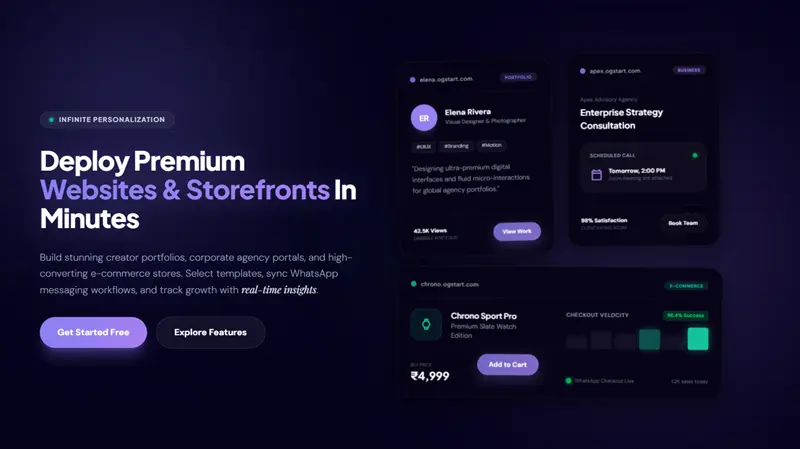
Platforms like OGStart.com make creating such a landing page incredibly accessible and affordable. For just INR 99, founders can launch a professional-looking page quickly, focusing on validating their idea without significant upfront investment in web development or hosting. This aligns perfectly with the "start small, launch fast, validate ideas affordably" ethos.
Collecting Early Sign-ups and Feedback
The primary goal of this landing page is lead generation. We use it to build an email list of interested prospects. Beyond just names and email addresses, we can strategically ask for additional information through optional fields or follow-up surveys to gain deeper insights into their specific needs and expectations. This direct line of communication allows us to nurture interest, gather invaluable feedback, and segment our audience for more targeted future marketing efforts. It's about building a community of potential users who feel invested in our journey.
Strategy 3: Cultivate a Community Before You Launch (The Power of Anticipation)
Modern tech launches thrive on community. We don't just build products; we build movements. Fostering a community early on creates loyal advocates who will spread the word organically and provide crucial support.
Leveraging Social Media and Niche Forums
We strategically identify where our target audience congregates online. For tech startups, this often includes platforms like LinkedIn, Reddit, specialized industry forums, Discord servers, and relevant Facebook groups. Our approach is not just to broadcast, but to genuinely engage. We participate in discussions, offer value, answer questions, and subtly introduce our upcoming solution as a potential answer to shared problems. We share glimpses of our development process, behind-the-scenes content, and thought leadership related to our niche. The key is authenticity and a genuine desire to connect.
Engaging with Early Adopters
Once we have a base of interested individuals (perhaps from our landing page sign-ups), we actively engage them. This could involve inviting them to a private beta group, asking for feedback on specific features, or even brainstorming naming conventions. Making them feel like insiders builds a strong sense of ownership and loyalty. These early adopters become our most passionate evangelists, ready to champion our product on launch day and beyond. Their enthusiasm is an incredibly powerful, and often free, marketing asset.
Strategy 4: Implement a Strategic Content Marketing Plan (Educate & Attract)
Content marketing is our long-game strategy for establishing expertise and attracting organic traffic. We recognize that before people are ready to buy, they need to be educated and informed.
Blogging, Videos, and Podcasts for Pre-Launch
We create valuable content that addresses the pain points and interests of our target audience, positioning our startup as a thought leader in the space. This could include blog posts explaining complex problems our product solves, tutorial videos showcasing the potential impact of our solution (even with mockups), or podcast interviews with industry experts who share our vision. The content doesn't overtly sell the product but builds trust and authority. We use a consistent publishing schedule to maintain momentum and keep our audience engaged.
SEO Basics for Visibility
Even before launch, we implement foundational Search Engine Optimization (SEO) practices. This means identifying relevant keywords our target audience uses to search for solutions and integrating them naturally into our landing page copy, blog posts, and other online content. We optimize titles, descriptions, and headings to improve our search engine rankings. By laying this groundwork early, we ensure that when our product officially launches, potential users can easily discover us through organic search, reducing reliance on paid advertising. This long-term strategy provides compounding returns as our content builds authority over time.
Strategy 5: Harness the Power of Beta Testing and Early Access (Refine & Validate)
Beta testing is more than just bug-hunting; it's a critical validation and refinement phase that brings real-world user perspectives into our development process.
Structured Feedback Loops
We invite a select group of our early adopters to test our MVP. This isn't a free-for-all; we establish clear objectives, provide specific tasks for testers, and create structured feedback mechanisms (e.g., surveys, dedicated forums, one-on-one interviews). We prioritize gathering insights on usability, value proposition, and critical functionality. What features are essential? What causes friction? Is the core problem truly being solved? The input from this phase is invaluable for ensuring product-market fit. The lean startup approach emphasizes continuous learning through experimentation, using an MVP to test hypotheses and gather actionable metrics.
Iterating Based on Real-World Usage
The insights gained from beta testing directly inform our product roadmap. We prioritize bug fixes, refine user flows, and even pivot features based on genuine user needs, rather than assumptions. This iterative process ensures that by the time of our public launch, we are offering a polished, user-centric product that has already demonstrated its value to a real audience. This also creates a feedback loop that builds stronger products and services over time. Platforms like OGStart.com, which offer affordable and flexible online presence solutions, enable startups to quickly deploy and test their ideas, making this iterative process highly efficient for first-time founders and those wanting to validate business concepts without prohibitive costs.
Strategy 6: Master the Art of Storytelling (Connect & Resonate)
In a crowded market, simply having a great product isn't enough. We must tell a compelling story that connects emotionally with our audience and differentiates us from the competition.
Crafting Your Brand Narrative
Every tech startup has a "why." We articulate our origin story, the problem we are passionate about solving, and the vision we have for a better future. This narrative should be authentic, inspiring, and consistent across all our communication channels. It's about conveying our values, our mission, and the human element behind the technology. People buy into stories and purposes, not just features. We focus on how our product empowers users, simplifies their lives, or creates new opportunities.
How to Make Your MVP's Story Compelling
Even with an MVP, we can tell a powerful story. We focus on the core value, the single most important problem it solves, and the transformation it offers. We use clear, benefit-driven language and avoid technical jargon. Visuals play a crucial role here, showing the product in action, even if it's an early prototype. Testimonials from early users or beta testers, even anecdotal ones, can add immense credibility and humanize our story. The narrative should build anticipation for what's to come, hinting at future possibilities without over-promising what the MVP currently delivers.
Strategy 7: Plan Your Launch Day Hype (The Grand Reveal)
The official launch day is the culmination of all our pre-launch efforts. We plan this meticulously to maximize impact and convert accumulated buzz into actual users.
The Press Kit and Media Outreach
Weeks before launch, we prepare a comprehensive press kit. This includes high-resolution logos, product screenshots, a well-written press release, founder bios, and compelling use cases. We identify key journalists, bloggers, and influencers in our niche and begin personalized outreach. The goal isn't just to get mentioned; it's to secure meaningful coverage that resonates with our target audience. We offer exclusive sneak peeks or interviews to generate deeper engagement and ensure accurate, positive portrayals.
Launch Day Promotions and Partnerships
On launch day, we execute a coordinated promotional blitz. This involves scheduled social media posts, email campaigns to our waiting list, and potentially paid advertising. We explore strategic partnerships with complementary products or services for cross-promotion. Contests, giveaways, or limited-time offers can also create urgency and drive initial user acquisition. The aim is to create a cascade of activity that makes our launch an undeniable event, driving initial sign-ups and user engagement.
Choosing the Right Foundation for Your Tech Startup's Online Presence
As we navigate these pre-launch strategies, it becomes evident that a robust, yet flexible and affordable online foundation is paramount. This is where platforms designed for the lean startup, such as OGStart.com, truly shine. We understand that first-time founders, Instagram and WhatsApp sellers, freelancers, creators, and local businesses testing new ideas need a solution that supports their ambition without draining their vital early-stage capital.
OGStart.com provides an ideal launchpad for just INR 99. This allows you to quickly create an ecommerce store, a professional portfolio website, a business/company website, or a high-converting landing page to implement many of the strategies discussed above. This "start small, launch fast, validate ideas affordably" philosophy is woven into the very fabric of OGStart. Users can begin with an OGStart subdomain and later connect their own custom domain once their business gains traction, emphasizing the upgrade-only-when-you-grow model.
We want to be clear that while you bring your own domain, OGStart handles all the complexities of hosting, platform infrastructure, and website/store management. This frees up your precious time and resources to focus on your core product, engaging your community, and perfecting your pre-launch marketing strategies. You don't have to pay like a big brand on day one; you only upgrade your plan when your growth genuinely demands more advanced features, ensuring your operational costs scale with your success.
Conclusion: Your Blueprint for Market Domination
The journey from MVP to market domination for tech startups is a marathon, not a sprint. It demands foresight, strategic planning, and an unwavering focus on the user. We have outlined seven unstoppable pre-launch strategies that, when executed diligently, will generate significant buzz, validate your product, and secure thousands of eager users by 2026.
By defining your niche, building an irresistible landing page, cultivating a dedicated community, implementing smart content marketing, refining through beta testing, mastering your brand's story, and executing a powerful launch day plan, you are not just launching a product; you are building a sustainable business. Remember, success in the tech world is not about luck; it's about a principled approach to new product development and continuous innovation, a cornerstone of the lean startup methodology. With the right strategies and an affordable, scalable online foundation like OGStart.com, your tech startup is poised not just to enter the market, but to dominate it.