
Don't Get Sued! The Crucial Accessibility Checklist for Small Service Businesses in 2026
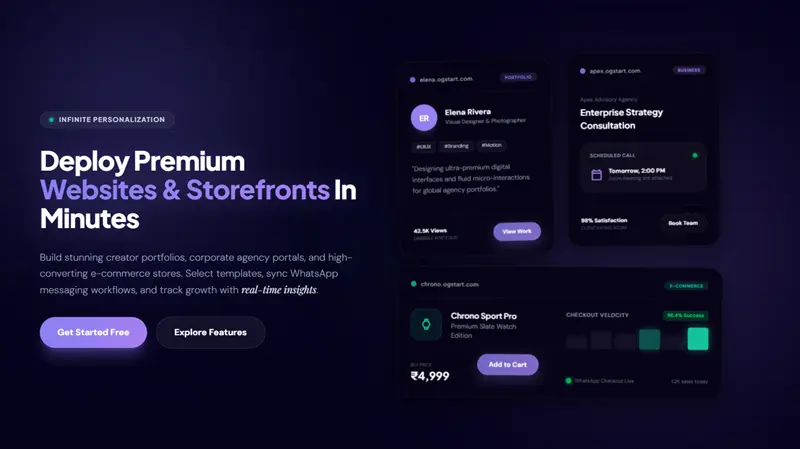
The digital landscape is constantly evolving, and for small service businesses, staying ahead means more than just having a website; it means having an accessible one. In 2026, web accessibility isn't merely a niche consideration or a 'nice-to-have' feature; it's a foundational pillar for legal compliance, ethical operation, and sustained business growth. At OGStart.com, we understand the challenges of launching and growing a business affordably. Our mission is to empower first-time founders, freelancers, and local businesses to get online quickly and without breaking the bank. This comprehensive guide is designed to equip you with the crucial accessibility checklist you need to navigate 2026, ensuring your online presence is inclusive, compliant, and poised for success from day one.
The Non-Negotiable Reality of Web Accessibility in 2026
For too long, web accessibility has been a secondary thought for many small businesses, often viewed as a complex, costly endeavor reserved for large corporations. However, as we move through 2026, this perception is not just outdated—it's dangerous. The legal and ethical imperative for an accessible website has never been stronger. Inaccessible websites can exclude individuals with disabilities, denying them equal access to information, goods, and services. This isn't just a moral failing; it's a significant legal risk that can lead to costly lawsuits and reputational damage.
Consider the staggering statistics: nearly 95% of websites fail basic accessibility standards. Moreover, web accessibility lawsuits against small online merchants, particularly those with annual revenues under USD 20 million or USD 25 million, are on the rise, accounting for a significant portion of all accessibility court cases. This reality underscores that even if you're starting small with an online store or a portfolio website on OGStart.com, ensuring accessibility from the outset is paramount. It’s about building a business that is not only successful but also inclusive and resilient.
Understanding Web Accessibility: More Than Just a Compliance Checkbox
What exactly is web accessibility? We systematically analyzed the principles that define an accessible web experience. Web accessibility refers to the practice of designing and developing websites so that people with disabilities can perceive, understand, navigate, and interact with the web. This includes individuals with visual, auditory, physical, speech, cognitive, language, learning, and neurological disabilities.
The global standard for web accessibility is defined by the Web Content Accessibility Guidelines (WCAG), developed by the Web Accessibility Initiative (WAI) of the World Wide Web Consortium (W3C). WCAG is organized around four core principles, often remembered by the acronym POUR:
- Perceivable: Information and user interface components must be presentable to users in ways they can perceive. This means providing text alternatives for non-text content, captions for audio/video, and ensuring sufficient color contrast.
- Operable: User interface components and navigation must be operable. This includes ensuring all functionality is available via keyboard, providing enough time for users to interact with content, and helping users navigate and find content.
- Understandable: Information and the operation of the user interface must be understandable. Content should be readable and predictable, and input assistance should be available to help users avoid and correct mistakes.
- Robust: Content must be robust enough that it can be interpreted reliably by a wide variety of user agents, including assistive technologies. This ensures compatibility with current and future tools.
The Legal Landscape: Why Small Businesses Are Targeted
In the United States, the Americans with Disabilities Act (ADA) prohibits discrimination based on disability in all areas of public life. While the original ADA predates the internet, courts and the Department of Justice (DOJ) have consistently affirmed that its provisions apply to websites as "places of public accommodation."
Recent developments in 2024 and 2026 have further solidified these expectations. The DOJ issued a final rule under ADA Title II, setting explicit technical requirements for state and local government entities, mandating WCAG 2.1 Level AA compliance. While these rules directly target public entities, we've observed that they significantly influence judicial interpretation for private businesses as well. Courts are increasingly looking to WCAG 2.1 Level AA as the de facto benchmark for website accessibility in lawsuits against private businesses, including small service businesses and e-commerce sites.
Small businesses are particularly vulnerable due to a combination of factors:
- Lack of Awareness: Many small business owners are simply unaware of their legal obligations regarding web accessibility.
- Resource Constraints: Perceived high costs deter some from investing in accessibility, making them easier targets.
- Prevalence of Inaccessibility: A vast majority of small business websites are not accessible, presenting a wide pool of potential targets for litigation.
The legal risk is real and growing. Ignoring accessibility is no longer a viable strategy; it can lead to demand letters, costly legal battles, and settlements that could cripple a budding business.
Your Essential Accessibility Checklist for 2026
To help you navigate these requirements, we've compiled a crucial accessibility checklist. While WCAG 2.1 Level AA remains the most frequently referenced standard, we advise aiming for WCAG 2.2 where possible, as it addresses emerging needs, particularly for mobile users and those with cognitive disabilities. Focusing on WCAG 2.2 compliance can future-proof your website.
Visual Accessibility: Ensuring Everyone Can See Your Site
- High Contrast Ratios: Text and interactive elements must have sufficient color contrast against their background. This is critical for users with low vision or color blindness. Automated tools can often flag low contrast issues.
- Alt Text for Images: All meaningful images must have descriptive alternative text (alt text). This allows screen readers to convey the image's content to users who cannot see it. Decorative images can have empty alt text (alt=""). Missing alt text is one of the most common accessibility errors.
- Text Resizing Options: Users should be able to resize text up to 200% without loss of content or functionality. Ensure your design accommodates this.
- Color Not Sole Indicator: Do not rely solely on color to convey information. For instance, if you highlight required form fields in red, also add an asterisk or text instruction.
Navigational & Operable Accessibility: Making Your Site Easy to Use
- Keyboard Navigation: Every single interactive element and piece of content on your website must be accessible and operable using only a keyboard (Tab, Enter, Spacebar, arrow keys). Unplug your mouse and try navigating your entire site.
- Clear Focus Indicators: When navigating with a keyboard, there must be a clearly visible focus indicator (e.g., a colored outline) around the active element. WCAG 2.2 emphasizes minimum visibility for these indicators.
- Descriptive Link Text: Link text should be descriptive and make sense out of context. Avoid generic phrases like "click here" or "read more." Instead, use "read more about our services" or "download the price list."
- Logical Heading Structure: Use HTML heading tags (H1, H2, H3, etc.) correctly and hierarchically to structure your content. H1 for the main title, H2 for major sections, H3 for sub-sections. This helps screen reader users understand the page's organization.
- Accessible Forms: All form fields must have clearly associated labels. Provide helpful error messages that are easily understood and accessible to screen readers.
- Orientation: Content must work in both portrait and landscape orientations without restricting the user, especially on mobile devices. (WCAG 2.2)
- Dragging Movements: Provide alternatives to drag-and-drop actions for users with limited mobility. (WCAG 2.2)
- Accessible Authentication: Offer authentication methods that don't rely solely on complex cognitive processes or visual recognition, such as biometrics or email-based logins, to assist users with cognitive disabilities. (WCAG 2.2)
Content & Understandable Accessibility: Clear Communication for All
- Readability and Plain Language: Write content in clear, concise language. Avoid jargon where possible. Break up long paragraphs and use bullet points for easier scanning.
- Transcripts for Audio/Video: Provide full text transcripts for all audio-only content and audio descriptions for video-only content.
- Captions for Video: All video content with speech should have accurate, synchronized captions.
- Consistent Navigation: Ensure your website's navigation is consistent across all pages. Predictable interfaces are easier for everyone to use.
Technical & Robust Accessibility: The Foundation of an Inclusive Site
- Semantic HTML: Use HTML elements for their intended purpose (e.g., <button> for buttons, <nav> for navigation). This provides crucial context for assistive technologies.
- ARIA Attributes: For complex or dynamic user interface components not covered by standard HTML, use Accessible Rich Internet Applications (ARIA) attributes to add semantic information.
- Responsive Design: Ensure your website adapts seamlessly to different screen sizes and devices. This is not just for mobile users but also for individuals who zoom in significantly.
- Regular Testing: Accessibility is an ongoing process. Regularly test your site using automated tools, manual keyboard navigation, and, ideally, with actual users with disabilities or assistive technologies like screen readers.
Integrating Accessibility with OGStart: Launching an Inclusive Business from Day One
At OGStart.com, we believe that starting small doesn't mean compromising on crucial aspects like accessibility. Our platform is designed to make launching your online business affordable and straightforward, whether it's an e-commerce store, a portfolio, or a business website. We handle the hosting, infrastructure, and website management, providing a robust foundation for your digital presence.
When you build with OGStart, you can leverage the inherent accessibility benefits of a modern, well-structured platform. Many of our themes and underlying components are developed with best practices in mind, setting you up for success. However, your active participation is key:
- Choose Accessible Themes: When selecting a template, prioritize those known for good accessibility features. Look for clean code and clear design principles.
- Content is King (and Accessible): The content you add – images, text, videos – is where many accessibility issues arise. Always add descriptive alt text to images, provide captions for videos, and use proper heading structures.
- Test Regularly: Even with a great platform, new content or customisations can introduce barriers. We encourage regular self-testing using the checklist above.
We empower you to launch your business online for INR 99 and upgrade only when your business grows. This affordability extends to building an accessible presence. By integrating accessibility from the start, you avoid costly retrofits and ensure your business reaches the widest possible audience.
Tools and Resources for Ongoing Accessibility
Maintaining an accessible website requires ongoing effort, but numerous tools and resources can assist you:
- Automated Testing Tools: Tools like Google Lighthouse or browser extensions can scan your site for common accessibility errors (e.g., contrast issues, missing alt text). However, remember that automated tools typically catch only about 30-40% of accessibility issues.
- Manual Testing: The most effective way to identify issues is through manual testing, including keyboard-only navigation and testing with screen readers.
- Accessibility Audits: Consider professional accessibility audits as your business grows, especially if you have complex functionalities.
- WCAG Guidelines: Refer directly to the Web Content Accessibility Guidelines (WCAG) published by the W3C Web Accessibility Initiative (WAI) for detailed technical specifications and best practices. You can access these comprehensive guidelines through the W3C Web Accessibility Initiative website.
- Department of Justice Guidance: The U.S. Department of Justice provides guidance on web accessibility under the ADA, which clarifies expectations for businesses. You can review the official guidance on the ADA.gov website.
Beyond Compliance: The Business Benefits of an Accessible Website
While legal compliance is a significant driver, the benefits of an accessible website extend far beyond avoiding lawsuits. We've identified several key advantages for small service businesses:
| Aspect | Inaccessible Website | Accessible Website |
|---|---|---|
| Audience Reach | Excludes a significant portion of the population (1.3 billion people globally live with disabilities) | Wider market reach, tapping into a diverse customer base, including 61 million individuals with disabilities in the U.S. and 71 million Baby Boomers who often benefit from accessibility features. |
| SEO Performance | Poor structure, lack of alt text, and uncaptioned media can hinder search engine crawling and indexing. | Improved SEO through semantic HTML, descriptive alt text, clear headings, and transcripts, leading to higher rankings and increased organic traffic. |
| User Experience | Frustrating and exclusive for many, leading to high bounce rates and lost conversions. | Enhanced user experience for everyone, as accessibility features often benefit all users (e.g., captions in noisy environments). |
| Brand Reputation | Negative perception, seen as uncaring or discriminatory, potentially leading to public backlash. | Positive brand image, demonstrating social responsibility and a commitment to inclusivity, fostering loyalty. |
| Legal Risk | High risk of lawsuits, demand letters, and costly settlements. | Reduced legal exposure, demonstrating good faith efforts towards compliance. |
Studies show that companies prioritizing web accessibility are four times as likely to outperform competitors in shareholder returns. Accessible websites also see an average 23% increase in organic traffic and can rank for 27% more organic keywords. For every USD 1 invested in accessibility, businesses can see an ROI of USD 100. These are compelling reasons for any business, regardless of size, to prioritize accessibility.
Conclusion: Build Better, Build for Everyone
The digital world in 2026 demands that small service businesses, just like their larger counterparts, embrace web accessibility. It’s no longer a suggestion; it’s a critical requirement that impacts legal standing, business growth, and ethical responsibility. By systematically implementing the checklist we've provided, you can ensure your website is perceivable, operable, understandable, and robust for every user.
At OGStart.com, we are committed to making your journey to an online presence as smooth and affordable as possible. By choosing to build your online store, portfolio, or business website with us, you get a powerful platform that supports your growth. And by integrating accessibility best practices from your launch at INR 99, you're not just creating a website; you're building an inclusive, compliant, and ultimately more successful business that serves everyone. Don't get sued—instead, build better, build for everyone.