
Accessibility for ALL: 5 Game-Changing Strategies Small Service Businesses Use to Win Trust & Outper
Accessibility for ALL: 5 Game-Changing Strategies Small Service Businesses Use to Win Trust & Outperform Rivals by 2026
Introduction: The Unseen Advantage of Digital Accessibility for Small Service Businesses
In today's interconnected digital landscape, the ability to reach every potential customer is not merely an ideal; it's a strategic imperative. For small service businesses, digital accessibility often remains an overlooked frontier, mistakenly perceived as a compliance burden rather than a powerful lever for growth. We systematically analyzed the evolving digital ecosystem and recognize that by 2026, businesses prioritizing accessibility will not just comply with regulations, but will fundamentally reshape their market position, winning trust and significantly outperforming rivals.
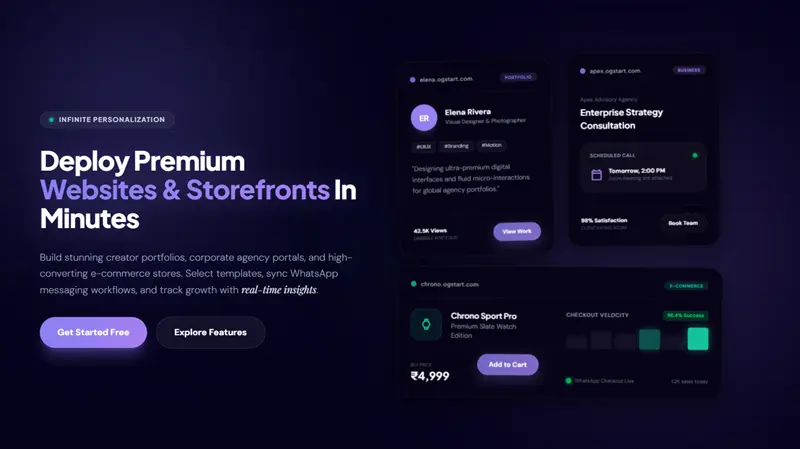
This article is crafted to provide first-time founders, Instagram and WhatsApp sellers, freelancers, creators, and local businesses with actionable insights into making their online presence inclusive. At OGStart.com, we believe that starting small and launching fast shouldn't mean compromising on crucial foundational elements like accessibility. Our platform is designed to help you build an online store, portfolio, landing page, or business website affordably, handling the hosting and infrastructure so you can focus on making your content accessible and connecting with a broader audience. You can launch your business online for as little as INR 99 and upgrade only when your business truly grows, validating your ideas without the upfront costs of a large brand.
Why Accessibility Isn't Just Good Ethics, It's Good Business (Especially for Small Services)
Many entrepreneurs focus primarily on market share and competitive advantage. While these are vital, we've found that a proactive approach to digital accessibility offers a unique pathway to both. It transcends mere ethical considerations, translating directly into tangible business benefits.
Expanding Your Market Reach: Tapping into Underserved Audiences
The global disability market is a significant economic force, often underestimated. Worldwide, there are approximately 1.85 billion people with disabilities, controlling an astounding USD 13 trillion in annual disposable income. When we include their friends, family, and caregivers, this market expands to 3.4 billion people – nearly half the world's population. In the U.S. alone, working-age adults with disabilities have an after-tax disposable income of about USD 490 billion. This isn't a niche; it's one of the largest and most underserved consumer markets globally. By making your online services accessible, you are immediately opening your business to a vast, loyal customer base actively seeking businesses that welcome them.
Furthermore, legal mandates like the Americans with Disabilities Act (ADA) in the U.S. increasingly extend to digital spaces, requiring websites to be accessible. Small businesses offering public accommodations must ensure their websites are accessible regardless of their number of employees. While the ADA was enacted before the internet's prevalence, courts and the Department of Justice (DOJ) have consistently interpreted "places of public accommodation" to include websites. Non-compliance can lead to costly legal challenges, something small businesses, especially those just starting, can ill afford.
Building Trust and Enhancing Brand Reputation
In a crowded marketplace, reputation is currency. A business that demonstrates commitment to inclusivity immediately stands out. By consciously designing for accessibility, you communicate a powerful message: "Everyone is welcome here." This fosters deep trust and loyalty among customers with disabilities and their allies. It positions your brand as empathetic, socially responsible, and forward-thinking, characteristics that resonate strongly with today's consumers. We've observed that such a reputation can be a significant differentiator, especially for service-based businesses where personal connection and trust are paramount.
Boosting SEO and User Experience for Everyone
Interestingly, many accessibility best practices align perfectly with Search Engine Optimization (SEO) goals. Accessible websites are often easier for search engines to crawl and index, improving your visibility in search results. Semantic HTML, descriptive alt text for images, clear headings, and logical content structure are all accessibility requirements that also provide search engines with more context about your page content, ultimately boosting your SEO performance. A Semrush study found that accessible websites can see an average 23% increase in organic traffic. This means that by making your website accessible, you're not just serving a specific demographic; you're improving the user experience for everyone and gaining a significant SEO advantage.
| Feature | Non-Accessible Website (Risk/Disadvantage) | Accessible Website (Benefit) |
|---|---|---|
| Market Reach | Excludes a significant portion of the population (1.85+ billion people globally). | Accesses a massive, underserved market, leading to increased customer base and loyalty. |
| Legal Compliance | Vulnerable to ADA lawsuits and penalties, particularly for public-facing businesses. | Mitigates legal risks, demonstrating compliance with federal and international standards. |
| Brand Perception | Can appear indifferent or exclusionary, damaging reputation. | Enhances brand image as inclusive, ethical, and customer-centric, building trust. |
| SEO Performance | May have poorer crawlability and lower search rankings due to unstructured content. | Boosts SEO through semantic HTML, alt text, and improved user signals; observed 23% increase in organic traffic. |
| User Experience (UX) | Frustrating for many users, leading to high bounce rates and lost conversions. | Improves usability for all, resulting in higher engagement, longer session durations, and better conversions. |
Strategy 1: Prioritize Accessible Website Design from Day One (The OGStart Way)
We've learned that retrofitting accessibility is far more costly and time-consuming than building it in from the start. For small businesses, this foundational approach is critical, especially when launching with platforms like OGStart.
Foundations of an Accessible Website
An accessible website begins with fundamental design choices. This includes using clear, semantic HTML (e.g., proper heading tags <h1>, <h2>, <h3>, instead of just styling text to look like headings), ensuring intuitive navigation, employing legible fonts, and maintaining sufficient color contrast. Mobile responsiveness is also a key component of accessibility, as many users access content on diverse devices.
With OGStart, we handle the complex technical infrastructure, allowing you to focus on your content and presentation. Our platform encourages structured content and offers customizable themes that can be made accessible with mindful content creation. By starting your online store, portfolio, or business website with us, you lay an inherently stronger foundation for accessibility.
Practical Steps for Small Business Owners
- Choose Accessible Themes/Templates: If you use a template, select one known for its accessibility features.
- Utilize Alt Text for Images: Always provide descriptive alt text for all images. This is crucial for screen readers and also benefits your SEO.
- Ensure Keyboard Navigation: Confirm that your entire website can be navigated and operated using only a keyboard (Tab, Enter, arrow keys). This is vital for users who cannot use a mouse.
- Maintain Good Color Contrast: Ensure there is sufficient contrast between text and background colors for readability, especially for users with low vision.
- Use Clear Form Labels: Label all form fields clearly and associate them correctly with their input elements.
We strongly recommend familiarizing yourself with the Web Content Accessibility Guidelines (WCAG) from the World Wide Web Consortium (W3C), particularly WCAG 2.1 Level AA, as these are the widely accepted international standards for web accessibility. Adhering to these guidelines helps ensure compliance and provides a better experience for all users.
Strategy 2: Embrace Assistive Technology Compatibility
For many individuals with disabilities, assistive technologies are their gateway to the digital world. Ensuring your online presence is compatible with these tools is not an advanced feature; it's a basic requirement for true accessibility.
Understanding Screen Readers and Other Tools
Screen readers are software applications that read aloud the content of a computer screen to users who are blind or have severe visual impairments. Other assistive technologies include screen magnifiers, voice recognition software, switch devices, and alternative input methods. Your website's underlying code and structure directly impact how well these tools can interpret and convey information to the user.
Making Your Content Readable and Navigable
We advocate for structured, logical content that assistive technologies can easily parse. This means:
- Clear Headings Hierarchy: Use <h1> for the main title, then <h2> for major sections, and <h3> for sub-sections. This creates a navigable outline for screen reader users.
- Descriptive Link Text: Avoid generic "click here" or "read more." Instead, use descriptive phrases like "Learn more about our services" so users know where the link leads without needing visual context.
- Proper Form Labeling: Ensure every input field has an associated <label> element, not just placeholder text.
- Transcripts and Captions: For any audio content (podcasts, voiceovers) provide text transcripts. For video content, offer accurate closed captions and, where appropriate, audio descriptions.
The U.S. Department of Labor's Office of Disability Employment Policy (ODEP) provides valuable resources on accessible technology and how it supports workers and users with disabilities. Organizations like the U.S. Small Business Administration (SBA) also emphasize the importance of accessible technology to reach all Americans.
Strategy 3: Offer Diverse Communication Channels & Personalized Support
Accessibility extends beyond your website's technical build. It encompasses how easily all your customers can interact with your business and receive support. Small service businesses thrive on customer relationships, making this strategy particularly impactful.
Beyond the Standard Contact Form
We've observed that limiting communication to a single channel can inadvertently exclude customers. Consider offering a variety of contact options:
- Email Support: A standard, asynchronous method.
- Phone Support: Include a phone number for direct contact, and be aware of Telecommunications Relay Services (TRS) like dialing 711 for TTY users.
- Live Chat: Real-time text-based support can be invaluable for many.
- Video Conferencing (with captioning options): For more complex service consultations, offer video calls with optional captioning.
This multi-channel approach ensures that individuals with different communication needs or disabilities can choose the method that works best for them.
Training Staff in Accessibility Awareness
Even the most accessible website can be undermined by uninformed customer service. We emphasize the importance of training your team to be empathetic and knowledgeable about accessibility issues. This includes:
- Understanding common assistive technologies.
- Knowing how to guide a customer experiencing an accessibility barrier on your site.
- Being prepared to offer alternative ways to access information or services (e.g., reading out product details over the phone).
A well-trained and understanding team reinforces your commitment to inclusivity and turns potential frustrations into positive customer experiences.
Strategy 4: Regularly Test and Audit Your Digital Presence
Accessibility is not a one-and-done project; it's an ongoing commitment. The digital landscape evolves rapidly, as do assistive technologies and user expectations. Regular testing ensures your business remains inclusive and compliant.
Why Continuous Improvement is Key
We advocate for accessibility as a continuous process. New features, content updates, or even platform changes can inadvertently introduce barriers. Periodic audits help identify and rectify these issues before they impact users or lead to legal challenges. This proactive approach saves time, resources, and preserves your brand reputation.
Simple Tools and Methods for Small Businesses
You don't need a large budget to conduct effective accessibility testing:
- Automated Accessibility Checkers: Browser extensions like Google Lighthouse (built into Chrome DevTools) and axe DevTools can scan your website for common accessibility issues. While useful for a quick check, they only catch a fraction of potential problems.
- Manual Keyboard Testing: Simply try navigating your entire website using only the Tab, Shift+Tab, and Enter keys. Can you reach all interactive elements? Is the focus order logical?
- Screen Reader Simulation: Learn basic screen reader commands (e.g., NVDA for Windows, VoiceOver for Mac) and test key user flows on your site.
- User Testing: If possible, engage individuals with various disabilities to test your website. Their lived experience provides invaluable feedback that no automated tool can replicate.
By integrating these checks into your regular website maintenance, you ensure that your accessible design efforts remain effective over time. This continuous validation is crucial for winning and maintaining customer trust.
Strategy 5: Foster an Inclusive Culture and Seek Feedback
Ultimately, the success of your accessibility initiatives hinges on your business's culture. Inclusivity must be more than a checkbox; it must be a core value that permeates every aspect of your operation.
Leading with Empathy and Openness
We believe that an inclusive culture starts at the top and trickles down. When small business owners genuinely embrace the philosophy of "Accessibility for ALL," it empowers their teams to do the same. This involves:
- Educating yourself and your team on the diverse needs of people with disabilities.
- Celebrating diversity and understanding different perspectives.
- Integrating accessibility into all decision-making processes, from marketing campaigns to product development.
This internal commitment will naturally reflect in your external interactions, attracting a wider customer base and fostering stronger relationships.
Soliciting and Acting on User Feedback
No one understands the accessibility of your service better than the users themselves. We strongly recommend creating clear and easily discoverable channels for users to provide feedback on accessibility. This could be:
- A dedicated accessibility statement page on your website with contact information.
- A direct email address for accessibility-related inquiries.
- A feedback form.
When you receive feedback, acknowledge it promptly, investigate the issue, and communicate the steps you are taking to address it. This transparency builds immense trust and demonstrates your commitment to continuous improvement. We have seen firsthand how businesses that actively listen and respond to accessibility feedback create incredibly loyal customer communities.
The OGStart Advantage: Launching an Accessible Business Affordably
Implementing these game-changing accessibility strategies might sound daunting for a small service business operating on a lean budget. This is precisely where OGStart comes in.
Our platform is built with the understanding that every founder needs a strong, affordable start. You can create a professional online presence – be it an e-commerce store, a service booking site, or a portfolio – for just INR 99. We handle the complexities of hosting, platform infrastructure, and website management, allowing you to focus your limited time and resources on making your content and services truly accessible. By providing a stable, scalable foundation, OGStart empowers you to embed accessibility from day one without paying like a big brand. You can start small, launch fast, validate your business ideas affordably, and upgrade only when your growth organically demands it. This low-risk entry point means you can invest your energy where it matters most: building an inclusive service that wins trust and outperforms competitors.
Conclusion: Your Blueprint for a More Inclusive and Prosperous Future
The movement towards digital accessibility is not a fleeting trend; it is the definitive trajectory of the internet. For small service businesses, embracing accessibility is no longer optional. It's a strategic pathway to expand your market, fortify your brand reputation, enhance your SEO, and cultivate deep, lasting customer trust. We have shown that by prioritizing accessible website design, embracing assistive technology compatibility, offering diverse communication channels, regularly auditing your digital presence, and fostering an inclusive culture, you can build a business that truly serves everyone.
The next few years will see a significant shift in consumer expectations and legal requirements. Businesses that proactively adopt these game-changing strategies will not just survive, but thrive. Start your journey towards an inclusive and prosperous future today. Launch your accessible service business effortlessly and affordably with OGStart.com, and be prepared to win trust and outperform your rivals by 2026 and beyond.