
Artistic Empire: The Ultimate 2026 Comparison of 6 POD Portfolio Platforms for Max Profit & Reach
Artistic Empire: The Ultimate 2026 Comparison of 6 POD Portfolio Platforms for Max Profit & Reach
As artists, creators, and entrepreneurs, we constantly seek avenues to expand our reach and monetize our passion. In 2026, the digital landscape for artists is more vibrant and competitive than ever, with Print-on-Demand (POD) platforms offering a compelling path to turn digital designs into physical products without the logistical headaches of inventory, printing, and shipping. We systematically analyzed the leading POD portfolio platforms to bring you an unbiased, in-depth comparison, focusing on what truly matters: maximizing your profit and reaching your target audience.
The online art market continues its robust growth, with online art sales making up a significant portion of the global art market. In 2024, online art sales represented 18% of the total art market, reaching approximately USD 10.5 billion. Projections indicate this market could grow to USD 19.3 billion by 2033, underscoring the immense potential for artists in the digital space. This growth is largely driven by increased accessibility and a new generation of buyers comfortable with digital transactions.
Understanding the Print-on-Demand Ecosystem for Artists
Print-on-Demand empowers artists to sell custom-designed products without upfront costs or managing physical inventory. When a customer places an order, the POD platform handles production, packaging, and shipping, sending the artist a commission or profit margin. This model is ideal for testing new designs, diversifying income streams, and reaching a global audience.
Key Factors for Evaluation
To provide a truly comprehensive comparison, we focused on several critical criteria:
- Profit Margins & Commission Structures: How much do artists actually earn per sale?
- Product Range & Quality: What types of products can you sell, and how is the production quality?
- Audience Reach & Marketing Tools: How large is the platform's user base, and what tools are available for promotion?
- Ease of Use & Customization: How simple is it to upload designs, manage a store, and customize your shopfront?
- Artist Control & Community: What level of creative control do you retain, and is there an active artist community?
- Pricing & Fees: Are there subscription costs, listing fees, or hidden charges?
The Top 6 POD Portfolio Platforms for 2026
We've meticulously evaluated six prominent platforms, each offering unique advantages for different types of artists and business models.
1. Redbubble
Redbubble stands as one of the most popular and accessible POD marketplaces globally. It boasts a massive, engaged audience searching for unique designs across a vast array of products. Artists upload their designs, and Redbubble handles everything from manufacturing to customer service. The platform offers a default artist margin of 20%, which artists can adjust, often increasing it for items like stickers to 50% or more, or for most other products up to 30%. However, Redbubble does charge a 20% commission from each sale, deducted from the artist's margin, covering production, shipping, and platform costs.
- Pros: Huge global audience, extensive product catalog (apparel, home goods, stationery, etc.), easy to use, no upfront costs, flexible artist margins.
- Cons: High competition, Redbubble's 20% commission can impact profit, potential for saturation.
2. Society6
Society6 is known for its curated aesthetic and focus on art prints, home decor, and lifestyle products. It often attracts a slightly more design-conscious customer base. Like Redbubble, artists upload designs, and Society6 manages fulfillment. Artists generally earn a 10% commission on most products, though they can set their own markup on base prices to increase their earnings. For art prints and canvas prints, artists earn a fixed profit. Society6 processes payments monthly via PayPal with a USD 20 minimum threshold, although some sources suggest no minimum threshold recently.
- Pros: Strong brand identity, high-quality products, good for artists focused on home decor, opportunity to set custom markups.
- Cons: Lower default commission rate compared to Redbubble for many products, strict curation can be a barrier for some.
3. Fine Art America (Pixels.com)
Fine Art America, also known as Pixels.com, positions itself as the world's largest art marketplace and print-on-demand fulfillment network, with 16 fulfillment centers globally. It caters specifically to fine art, photography, and digital art, offering a wide range of print options including canvas, metal, acrylic, and framed prints, alongside various other products. Artists set their own markup on top of FAA's base production cost and keep 100% of that markup. A standard membership is free and allows up to 25 images, while a premium membership at USD 30 per year offers unlimited uploads and advanced marketing tools. They explicitly state they do not take commissions on original artwork sales, allowing artists to communicate directly with buyers for these transactions.
- Pros: High-quality print options, artist retains 100% of their set markup, large global reach, free basic account, robust marketing tools.
- Cons: Can be challenging to stand out among millions of artworks, premium features require an annual fee.
4. ArtStation
ArtStation is the go-to platform for digital artists, illustrators, and concept artists, particularly those in the game and film industries. While primarily a portfolio site, it also offers a marketplace where artists can sell digital products (brushes, tutorials, 3D models) and physical prints through its POD service. ArtStation was acquired by Epic Games, which significantly reduced marketplace fees. For print sales, artists set their own markup on top of a base price. Pro members (a paid subscription) can earn up to 95% on self-promoted sales and an additional 5% on the base price for printed products. Non-Pro members earn 70% on digital product sales and are subject to a 12% marketplace fee for sales through the general marketplace.
- Pros: Highly targeted audience of industry professionals and art enthusiasts, excellent for digital artists, high earning potential for Pro members, strong community, learning resources.
- Cons: Niche audience may be smaller for traditional print sales, Pro membership has a cost.
5. INPRNT
INPRNT stands out for its commitment to exceptional print quality and a curated selection of artists. It's often favored by artists who prioritize museum-grade prints. Unlike many other platforms, INPRNT has an application process where artists submit their work for review by existing members to maintain a high standard of quality. For standard art prints, artists earn 50% of the sale price. For other products like cards, phone cases, and acrylic prints, artists set the final retail price and keep 100% of the markup on top of INPRNT's base production cost.
- Pros: Superior print quality, artist-friendly commission structure for prints, curated marketplace offers prestige, no upfront fees, handles fulfillment entirely.
- Cons: Application process can be selective, smaller product range compared to larger marketplaces, international shipping can be pricey.
6. Etsy (with POD Integrations)
Etsy, while not a dedicated POD platform itself, is a massive marketplace for handmade, vintage, and craft goods. Many artists successfully integrate Print-on-Demand services like Printful or Printify directly with their Etsy shops. This allows artists to leverage Etsy's enormous customer base (over 89 million active buyers) while having a third-party handle the production and shipping of POD items. Artists pay Etsy listing fees and transaction fees, plus the cost of the POD service, but retain control over their pricing and branding within their Etsy shop.
- Pros: Vast existing customer base, high control over shop branding and pricing, wide range of product types through integrations, low-risk entry.
- Cons: Requires integrating with a separate POD service, Etsy fees (listing, transaction, payment processing) add up, significant competition, requires more active shop management and marketing from the artist.
Comparative Analysis: Max Profit & Reach
We've compiled a detailed comparison to highlight the nuances of each platform, helping you make an informed decision for your artistic journey.
| Platform | Primary Focus | Artist Profit/Commission | Audience Reach | Product Range | Ease of Use | Key Advantage for Artists |
|---|---|---|---|---|---|---|
| Redbubble | General POD Marketplace | 10-30% on retail price (default 20%, adjustable markup). Redbubble takes 20% commission from artist margin. | Massive, broad consumer market. | Wide (Apparel, home goods, stationery, etc.) | Very Easy | Broad exposure, low entry barrier. |
| Society6 | Curated Art & Home Decor | 10% on most products; custom markup on base price possible. Fixed profit on art prints/canvas. | Design-conscious, younger demographic. | Home decor, art prints, lifestyle. | Easy | Aesthetic focus, high-quality products for home. |
| Fine Art America | Fine Art Prints & Photography | Artist keeps 100% of their set markup. | Art collectors, photography enthusiasts. | Fine art prints (canvas, metal, acrylic), home decor. | Moderate | High profit retention on markup, museum-quality prints. |
| ArtStation | Digital Art & Game/Film Industry | Pro members: up to 95% on self-promoted sales, 5% on base price for prints. Non-Pro: 70% on digital goods, 12% marketplace fee. | Niche audience of professionals & enthusiasts. | Prints, digital assets (brushes, tutorials). | Moderate | Targeted professional audience, high digital product earnings. |
| INPRNT | Curated Fine Art Prints | 50% of sale price for prints. 100% of markup for other products. | Artists & collectors prioritizing print quality. | Limited (Art prints, canvas, phone cases, cards). | Moderate (Application required) | Exceptional print quality, artist-centric approach. |
| Etsy (with POD Integration) | Handmade & Custom Goods Marketplace | Artist sets retail price, subtracts POD cost & Etsy fees. | Vast, global market for unique items. | Highly varied (through POD partners). | Moderate (requires integration) | Large existing buyer base, full branding control. |
Navigating the Legal Landscape: Copyright and Your Art
While these platforms offer incredible opportunities, protecting your intellectual property is paramount. Copyright law automatically protects your original work the moment it's created and "fixed" in a tangible medium, such as saving a digital file. This grants you exclusive rights to reproduce, distribute, display, and create derivative works from your art.
However, to fully enforce these rights, especially in cases of infringement, registering your copyright with the appropriate national office (e.g., the U.S. Copyright Office) is crucial. Registration provides a public record of ownership and is necessary to seek statutory damages and attorney fees in court. Remember, simply posting your work online or on social media does not equate to full legal protection against theft.
The Future is Hybrid: Combining POD with Your Own Platform
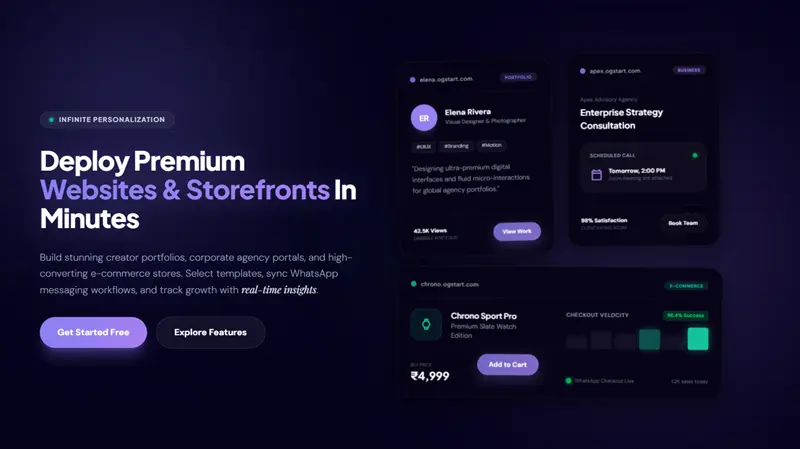
While POD platforms excel at reach and convenience, we've observed that the most successful artists often employ a hybrid strategy. They leverage the broad marketplaces for visibility and passive income, while simultaneously cultivating their own branded online presence. This is where platforms like OGStart.com become invaluable.
Imagine having your primary portfolio and e-commerce store built on OGStart, showcasing your unique brand, telling your story, and selling exclusive prints or digital products directly to your audience. This gives you:
- Complete Brand Control: Your aesthetic, your message, your customer experience.
- Higher Profit Margins: No platform commissions on sales made directly through your site.
- Direct Customer Relationships: Build email lists, gather feedback, and foster a loyal community.
- Scalability: Start small with OGStart's INR 99 plan, and easily upgrade features as your business expands, without ever having to worry about hosting or infrastructure.
You can then strategically use POD marketplaces as an additional sales channel, driving traffic back to your main site, or offering a broader range of products that are easier to manage through a third party. This dual approach maximizes both profit and reach, building a resilient and profitable artistic empire.
Crafting Your Strategy for 2026 and Beyond
Choosing the right POD platforms and integrating them into a broader online strategy is crucial. There's no one-size-fits-all answer. Your ideal platform mix will depend on your art style, target audience, and business goals.
- For maximum exposure and diverse products: Redbubble, Society6, and Etsy (with POD) are strong contenders.
- For fine art quality and higher profit retention: Fine Art America and INPRNT offer compelling options.
- For niche digital artists and industry connections: ArtStation is unparalleled.
Regardless of your choice, remember that active promotion and consistent creation are the cornerstones of success. Engage with your audience on social media, optimize your listings with relevant keywords, and continuously refine your artistic offerings. The online art market values authenticity and unique vision, so let your passion shine through in every piece you create and every platform you utilize.
Conclusion: Building Your Artistic Future
The 2026 landscape for artists looking to monetize their work through Print-on-Demand is rich with opportunity. By carefully considering platform specifics, understanding profit structures, and proactively protecting your intellectual property, you can forge a powerful presence online. We encourage you to experiment, learn, and adapt. And for those ready to take full ownership of their digital destiny, launching your own website with an affordable, scalable solution like OGStart.com provides the foundation for truly independent and profitable growth. Don't pay like a big brand on day one; start small, launch fast, and upgrade only when your artistic empire flourishes.
To further understand the dynamics of the online art market and effective marketing strategies for artists, we recommend exploring resources such as reports from leading art market analysts or comprehensive guides on Art Market Trends 2025 by Artsy.