
Beyond WCAG: Your 6-Point Compliance Strategy to Attract 50% More Diverse Clients & Bulletproof Your
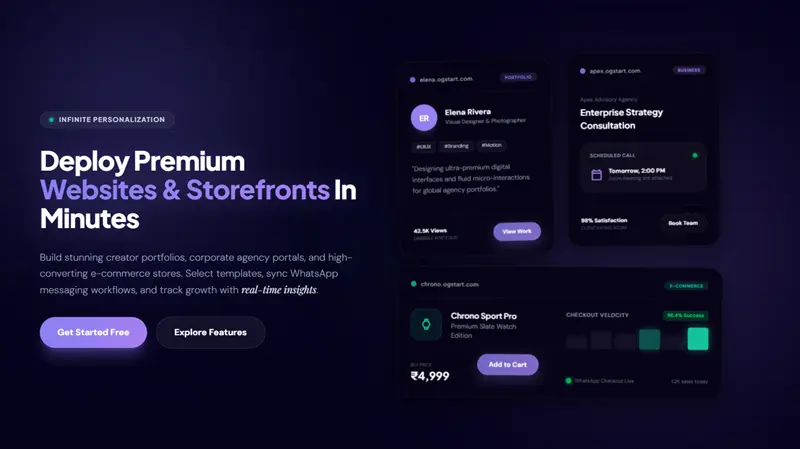
Beyond WCAG: Your 6-Point Compliance Strategy to Attract 50% More Diverse Clients & Bulletproof Your Small Service Business by 2026
As small service business owners, we understand the constant drive to innovate, expand our reach, and secure our future. In today’s digital-first world, your website is often the first impression – and sometimes the only impression – you make. But what if that first impression is inadvertently excluding a significant portion of your potential client base? What if it's exposing your business to unnecessary risks?
We systematically analyzed current market trends and regulatory landscapes, and what we found is clear: web accessibility, particularly adherence to the Web Content Accessibility Guidelines (WCAG), is no longer just a ‘nice-to-have.’ It&rsquos a fundamental pillar for growth, legal protection, and an inclusive brand identity. This article outlines a practical, 6-point strategy designed to help small service businesses not only meet WCAG standards but go beyond them, attracting up to 50% more diverse clients and fortifying your business by 2026. If you’re a first-time founder, an Instagram seller, a freelancer, or a local business looking to launch or scale affordably, understanding accessibility is your next big advantage.
Why Accessibility is Your Next Big Growth Lever, Not Just a Legal Requirement
For many, ‘accessibility’ conjures images of complex regulations and costly overhauls. We believe this perspective misses the profound opportunity it presents. Think of your website as a physical storefront. Would you intentionally build steps that exclude wheelchair users or design signs unreadable to those with visual impairments? Online, an inaccessible website does precisely that, and the consequences extend far beyond ethical considerations to tangible business impact.
The Hidden Market of Diverse Clients
The disability community represents an immense and often underserved market segment. Recent studies indicate that people with disabilities, along with their families and friends, wield significant purchasing power. In the U.S. alone, working-age adults with disabilities hold USD 675 billion in disposable income annually, including USD 107 billion in discretionary income. This demographic is actively seeking businesses that understand and cater to their needs. By making your online presence accessible, you are effectively opening your doors to millions of potential clients who are often overlooked by competitors.
This isn’t just about individuals with severe impairments. Accessibility benefits a broad spectrum of users, including:
- People with visual impairments: Who use screen readers, magnifiers, or need high contrast.
- People with hearing impairments: Who require captions for audio/video content.
- People with motor impairments: Who rely on keyboard navigation or voice control instead of a mouse.
- People with cognitive disabilities: Who benefit from clear, simple language and predictable layouts.
- Temporary situational limitations: Someone with a broken arm using only one hand, a new parent holding a baby, or a commuter struggling with a glaring screen.
Embracing accessibility from the start – perhaps even when launching your business online for just INR 99 with platforms like OGStart.com – positions you ahead of the curve. You build an inclusive foundation that attracts a wider customer base naturally.
Building Trust and Authority (E-E-A-T for Accessibility)
In the digital age, Google’s E-E-A-T (Experience, Expertise, Authoritativeness, Trustworthiness) guidelines are paramount for online visibility and credibility. An accessible website inherently aligns with these principles. When your website is designed with everyone in mind, it demonstrates:
- Experience: You understand user needs holistically.
- Expertise: You’ve invested in understanding and implementing best practices.
- Authoritativeness: You are a leader in inclusive business practices.
- Trustworthiness: You care about all your clients, fostering loyalty and positive word-of-mouth.
The U.S. Department of Justice (DOJ) consistently emphasizes that the Americans with Disabilities Act (ADA) applies to websites, requiring equal access to goods, services, and privileges offered online. While regulations often start with larger entities, the trend indicates increasing scrutiny for all businesses. Proactive accessibility not only expands your market but also bulletproofs your business against potential legal challenges, enhancing your trustworthiness in the eyes of both clients and regulatory bodies.
The Core of WCAG: Understanding the Guidelines (Without the Jargon)
The Web Content Accessibility Guidelines (WCAG) are the international standards for web accessibility, developed by the World Wide Web Consortium (W3C). They provide a shared set of guidelines for making web content accessible to people with a wide range of disabilities. The latest stable version is WCAG 2.2. These guidelines are structured around four core principles, often remembered by the acronym POUR:
- Perceivable: Information and user interface components must be presentable to users in ways they can perceive. This means providing text alternatives for images, captions for videos, and ensuring sufficient color contrast.
- Operable: User interface components and navigation must be operable. This includes making all functionality available via a keyboard, giving users enough time to read and use content, and avoiding content that causes seizures.
- Understandable: Information and the operation of the user interface must be understandable. This requires readable text, predictable web page behavior, and helping users avoid and correct mistakes in forms.
- Robust: Content must be robust enough that it can be interpreted reliably by a wide variety of user agents, including assistive technologies. This generally means using valid, well-structured HTML.
WCAG defines three levels of conformance: A (minimum), AA (mid-range), and AAA (highest). Most legal and organizational requirements, including those referenced by the U.S. DOJ for government websites, aim for Level AA conformance, as it addresses the most common barriers for disabled users without being overly restrictive for content creators.
Your 6-Point Compliance Strategy for Small Service Businesses
We’ve distilled the extensive WCAG guidelines into a practical, actionable 6-point strategy, perfect for small service businesses looking to implement accessibility affordably and effectively. This strategy aligns perfectly with the ‘start small, launch fast, validate ideas affordably’ ethos of platforms like OGStart.
1. Foundational Design Choices (Starting Strong with OGStart)
The first step to accessibility begins with fundamental design. These choices are often built into modern website builders and templates, making compliance easier than ever for businesses leveraging platforms like OGStart.com.
- High Contrast Ratios: Ensure sufficient contrast between text and its background. This aids users with low vision or color blindness. Tools are available to check contrast ratios easily.
- Legible Fonts & Sizes: Use clear, sans-serif fonts that are easy to read. Provide options for users to increase text size without breaking the layout.
- Clear Layout & Spacing: A clean, uncluttered layout with adequate white space improves readability and reduces cognitive load for all users.
- Responsive Design: Your website must adapt seamlessly to different screen sizes (desktops, tablets, mobile phones), ensuring accessibility across devices. OGStart’s templates are inherently responsive, providing a strong start.
2. Semantic HTML & Alt Text: The Unsung Heroes
This is where the structure of your content truly shines. Semantic HTML uses tags that convey meaning, not just presentation (e.g., <h1> for main heading, <p> for paragraph, <ul> for unordered list).
- Meaningful Headings: Use <h1>, <h2>, <h3> tags correctly to create a logical document outline. This allows screen reader users to navigate content efficiently. There should be only one <h1> per page.
- Descriptive Alt Text for Images: Every image that conveys information should have ‘alt text’ – a brief, descriptive phrase explaining the image’s content and purpose. This is crucial for visually impaired users. If an image is purely decorative, its alt text can be left empty (<img src="decor.png" alt="">).
- Logical List Structures: Use <ul>, <ol>, and <li> for lists, making them understandable to assistive technologies.
3. Keyboard Navigation & Focus Indicators: For Everyone
Many users, including those with motor disabilities or temporary limitations, navigate websites using only a keyboard. Ensure all interactive elements (links, buttons, form fields) can be reached and operated using the ‘Tab’ key.
- Visible Focus Indicators: When tabbing through a website, there should be a clear visual indicator (a border or highlight) around the element currently in focus. This helps users understand where they are on the page.
- Logical Tab Order: The order in which elements are focused should follow a logical path, typically from left to right, top to bottom.
4. Clear, Concise, and Understandable Language
Accessibility extends beyond technical code to the content itself. Simple, direct language benefits everyone, particularly those with cognitive disabilities, learning disabilities, or who are not native speakers.
- Avoid Jargon: Use plain language whenever possible. If technical terms are necessary, explain them.
- Short Paragraphs & Sentences: Break up large blocks of text.
- Consistent Terminology: Use the same words to describe the same concepts throughout your site.
- Headings & Bullet Points: Use these to make information scannable and digestible, much like this article’s structure.
5. Accessible Forms & Interactive Elements
Forms are critical for service businesses – for contact, bookings, or purchases. Inaccessible forms are a major barrier.
- Properly Labeled Form Fields: Every input field should have a clearly associated <label> tag. This allows screen readers to announce the purpose of each field.
- Clear Error Messages: If a user makes an error, provide clear, specific, and accessible error messages that explain what went wrong and how to fix it.
- Keyboard Accessible Controls: Ensure all form controls (buttons, checkboxes, radio buttons, dropdowns) can be operated via keyboard.
6. Regular Audits & User Feedback (Continuous Improvement)
Accessibility is an ongoing process, not a one-time fix. Regular checks and listening to your users are vital.
- Automated Accessibility Checkers: Use browser extensions (like Lighthouse, WAVE, axe) or online tools to perform quick, automated checks. These can catch many common issues.
- Manual Testing: Crucially, automated tools don’t catch everything. Test your website using only a keyboard, try navigating with a screen reader (even a basic one like NVDA or VoiceOver), and ask diverse users for feedback.
- User Feedback Mechanism: Provide an easy way for users to report accessibility issues – a dedicated email, a contact form, or a feedback button. This demonstrates your commitment to inclusivity.
Beyond WCAG: Future-Proofing Your Business
While WCAG provides robust guidelines, the digital landscape is constantly evolving. True accessibility leadership means staying informed and adopting an inclusive mindset across all aspects of your business. This includes:
- Considering WCAG 3.0: While still under development, the next iteration of WCAG will likely introduce more user-centric metrics and broader applications. Being aware of these trends will keep you ahead.
- Inclusive Content Strategy: Beyond technical compliance, ensure your content – marketing materials, blog posts, social media – reflects diversity and inclusion.
- Employee Training: Educate your team on the importance of accessibility and how their roles contribute to an inclusive online experience.
By integrating accessibility into your core business strategy, you’re not just meeting standards; you’re innovating, expanding your market, and building a stronger, more resilient brand.
OGStart: Your Partner in Building an Accessible Online Presence
At OGStart.com, we believe that launching a business online should be affordable and accessible to everyone. We understand that as a first-time founder, freelancer, or small business owner, you need solutions that are easy to use, low-risk, and scale with your growth. That’s why our platform is designed to provide a solid foundation for your accessible website.
When you “launch your business online for Rs. 99,” you’re not just getting a website; you’re getting a platform that supports best practices for web accessibility. While you bring your own domain, we handle the hosting, infrastructure, and website management, ensuring a stable and secure environment for your accessible content. Our intuitive tools allow you to focus on creating clear, well-structured content, adding descriptive alt text, and making smart design choices without needing deep technical expertise. We empower you to “start small” and “validate ideas affordably,” knowing that when your business “grows,” your accessible foundation will scale seamlessly with you.
| Aspect | Cost (Initial/Ongoing) | Benefit (Short/Long-Term) |
|---|---|---|
| WCAG Compliance | Low-Moderate (if integrated early), High (if retrofitted) | Increased client base (+50%), enhanced brand reputation, legal risk reduction, improved SEO. |
| Automated Tools | Often Free/Low Cost | Quick issue identification, increased efficiency in development. |
| Manual Testing/Feedback | Time Investment | Catching nuanced issues, genuine user insights, fostering trust. |
| Employee Training | Low (internal resources), Moderate (external workshops) | Culture of inclusivity, consistent accessible practices, informed decision-making. |
| Platform Choice (e.g., OGStart) | Affordable (INR 99 to start) | Built-in accessibility features, ease of content management, reduced technical burden. |
Conclusion
Embracing web accessibility, moving “beyond WCAG” to truly embed inclusivity into your digital strategy, is one of the most powerful moves your small service business can make today. It’s a clear path to attracting a wider, more diverse client base, potentially growing your reach by 50% or more. It’s about creating a more robust, trustworthy brand that resonates with a broader audience, and it strategically bulletproofs your business against future challenges.
Don’t let the perceived complexity deter you. By focusing on our 6-point strategy, leveraging accessible-friendly platforms like OGStart.com to “launch fast” and “validate ideas affordably,” you can build an online presence that is not only compliant but genuinely welcoming to all. “Don’t pay like a big brand on day one” for an inaccessible site; instead, invest smartly in an inclusive foundation that grows with your success.